

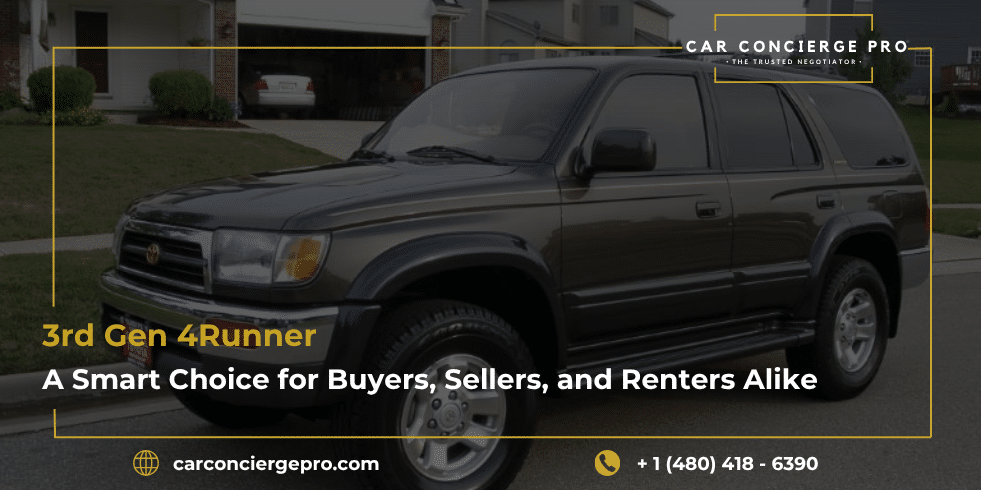
The 3rd Generation Toyota 4Runner (1996–2002) continues to be a benchmark in the SUV world for reliability, off-road capability, and long-term value. Nearly three decades after its debut, this generation remains highly sought-after by buyers, sellers, collectors, and rental fleet operators. Whether for adventure, everyday use, or fleet rentals, the 3rd Gen 4Runner offers a unique combination of mechanical simplicity, nostalgia, and versatility.
Why the 3rd Gen 4Runner Became a Modern Classic
The 3rd Gen 4Runner marked a significant evolution from the pickup-based SUVs of the 1980s. Toyota introduced a model that balanced ruggedness with daily usability.
Key Features That Made It Stand Out:
- Mechanical Reliability: The 3.4-liter V6 engine paired with a five-speed automatic transmission ensured longevity, with many units surpassing 250,000 miles with minimal major repairs.
- Off-Road Capability: High ground clearance, locking differentials, and body-on-frame construction made it a capable off-roader while retaining daily drivability.
- Safety Upgrades: Dual airbags, ABS brakes, and optional all-wheel drive enhanced passenger protection.
- Comfort Enhancements: Improved interior ergonomics, better soundproofing, and comfortable seating ensured long trips were enjoyable.
- Simplicity and Serviceability: Mechanical systems were straightforward, allowing owners to perform DIY repairs and routine maintenance with relative ease.
This combination of features created a lasting legacy, cementing the 3rd Gen 4Runner as a modern classic that appeals to enthusiasts, collectors, and everyday SUV buyers.
Why Buyers Still Seek the 3rd Gen 4Runner in 2025–26
Used vehicle markets in 2025–26 are influenced by ongoing supply chain volatility, cost inflation, and higher financing rates, which continue to shape the automotive market. Amidst this volatility, buyers prioritize reliability, long-term performance, and affordability.
Reasons Modern Buyers Choose the 3rd Gen 4Runner:
- Unmatched Reliability: Toyota’s engineering ensures longevity well beyond typical used-SUV life cycles.
- Affordable Price Range: Depending on trim, mileage, and modifications, prices generally range from $5,000 to $17,000.
- Mechanical Simplicity: Parts are often interchangeable with the Toyota Tacoma and Hilux, keeping repairs inexpensive.
- Off-Road Readiness: High ground clearance, strong suspension, and robust body-on-frame construction make it versatile across terrains.
- Entry-Level 4×4 Option: Ideal for first-time SUV buyers or adventure seekers on a budget.
Buyer Profiles for 2025–26
Buyer Type | Why They Choose 3rd Gen 4Runner | Example Use Case |
Adventure seekers | Rugged off-road capability, high ground clearance | Weekend trails, off-road adventures |
Budget-conscious buyers | Affordable used vehicle price, low maintenance cost | Daily commuting, road trips |
First-time SUV owners | Mechanical simplicity, easy DIY repairs | City + off-road combination |
Collectors | Nostalgic appeal, limited production numbers | Auctions, car shows |
Rental fleet operators | Durability, minimal electronics | Beach/off-road rentals, eco-tourism fleets |
Best Model Years for Value and Reliability
Certain 3rd Gen 4Runner years stand out due to updated features and overall reliability:
Model Year | Highlight Features | Buyer Advantage |
1996–1998 | Classic styling, simple mechanics | Lower purchase price, easier maintenance |
1999–2000 | Interior redesign, stronger differential | Ideal balance of reliability and comfort |
2001–2002 | Stability Control (VSC), clear taillights | Improved safety, modern appearance |
Sweet Spot: The 1999–2000 models are widely considered the best compromise of value, reliability, and updated interior features.
How the 3rd Gen 4Runner Retains Value
The 3rd Gen 4Runner enjoys a flatter depreciation curve than most SUVs in its class. CareEdge data shows it loses roughly 25% of its value over five years, compared to a segment average of 45%.
Key Value Retention Factors:
- Legendary Toyota reliability ensures high resale confidence.
- Robust aftermarket support fuels enthusiast demand.
- Nostalgic appeal has transformed it from a used vehicle into a modern classic.
- Minimal electronics reduce repair costs and downtime compared to newer models.
Estimated Market Value in 2025
Trim | Typical Price Range | Mileage Consideration |
SR5 Base | $5,000–$8,000 | 150k–200k miles |
SR5 Premium | $8,000–$12,000 | 120k–180k miles |
Limited | $12,000–$17,000 | 100k–150k miles |
Restoration, Modification, or Stock: Choosing Your Approach
Restoration
Restoring a stock 3rd Gen preserves collector value. Low-mileage SR5s and Limited trims perform well in auctions when historical service records are maintained.
Modification
Off-road enthusiasts can install lift kits, TRD superchargers, or modern infotainment systems for $3,000–$6,000. While this improves capability, it may slightly reduce resale appeal to purists.
Rental/Fleet Use
Fleet operators benefit from:
- Minimal electronics for lower downtime
- Easy access to engine and transmission components worldwide
- Broad appeal for adventure rentals and eco-tourism
Maintaining OEM-grade parts and documented service records protects resale and insurance value over the long term.
Why Renters and Adventure Fleets Prefer the 3rd Gen
Short-term rental operators increasingly demand SUVs that combine retro style and practicality.
Advantages for Fleets:
- Minimal Electronics Reduce Repair Downtime: With fewer complex electronic systems, maintenance and troubleshooting are simpler and faster. This keeps fleet vehicles on the road longer and reduces operational costs.
- Engine and Transmission Are Easy to Service Worldwide: Standardized mechanical components allow independent mechanics to perform repairs without specialized tools. This makes servicing more accessible and cost-effective in remote or international locations.
- Drivers Enjoy an Authentic Analog Driving Experience: The 3rd Gen 4Runner delivers direct, mechanical feedback that modern SUVs often lack. This enhances driver engagement and makes it ideal for adventure and off-road use.
Popular Rental Markets
Location | Demand Level | Use Case |
Texas | High | Off-road rentals and weekend adventures |
Nevada | Moderate | Desert and canyon exploration |
Colorado | High | Mountain trails and adventure tours |
Common Concerns and Weak Points
Even the most reliable vehicles have age-related issues. Key inspection points include:
- Frame Rust: In northern states, exposure to road salt and moisture often causes corrosion on the frame rails. Be sure to inspect the rear axle mounts carefully, as rust here can weaken the vehicle’s structural integrity over time.
- Suspension Sag: Worn or fatigued rear springs may cause the 4Runner to sit lower in the back, creating a “tail-drag” stance. This affects ride comfort, handling, and off-road stability if not addressed promptly.
- Dashboard Cracking: Extended exposure to heat and sunlight can cause dashboards to warp or crack. This problem is common in SR5 and Limited trims and can impact both aesthetics and interior resale value.
- Timing Belt and Head Gasket: Toyota recommends replacing the timing belt every 90,000 miles to prevent potential engine failure. Similarly, checking the head gasket regularly ensures the engine maintains optimal performance and longevity.
A Car Concierge Pro inspection can validate VIN history and mechanical integrity before purchase.
Comparison with Later Generations
Generation | Years | Engine / Tech | Ride Character | Value Trend |
3rd Gen | 1996–2002 | 3.4-L V6, manual option | Classic off-road, mechanical | Rising (Collector status) |
4th Gen | 2003–2009 | V8 Option, 4WD A-Trac | Balanced on/off-road | Steady |
5th Gen | 2010–2024 | 4.0-L V6 Only | Comfort-focused, aging tech | Peaking resale |
6th Gen | 2025–Present | Turbo 2.4-L Hybrid | High tech / low mechanical simplicity | Depreciating faster |
The 3rd Gen remains preferred for analog control, mechanical simplicity, and long-term reliability compared to newer electronics-heavy generations.
Collector and Enthusiast Premium
Rarity and nostalgia drive demand for rust-free, low-mileage examples, which can command $30,000–$35,000 in specialist markets.
Collectors value:
- Distinct 1990s design language: The 3rd Gen 4Runner showcases the bold, angular styling of the late 1990s, which has become iconic among SUV enthusiasts. Its classic lines and recognizable profile set it apart from modern, more uniform SUV designs, making it highly collectible.
- Genuine 4WD mechanical setup without electronic interference: This generation features a traditional body-on-frame construction with true 4WD systems, providing a raw and mechanical driving experience. Collectors appreciate the absence of complex electronics, which enhances reliability and makes off-road adventures more authentic.
- Large DIY and restoration community: A strong enthusiast network exists for sourcing parts, sharing tips, and performing restorations or modifications. This active community ensures that maintaining or upgrading a 3rd Gen 4Runner is easier and more affordable compared to rarer, less-supported vehicles.
- Simplicity compared to modern EV/hybrid SUVs: Without intricate hybrid or electric systems, this SUV is mechanically straightforward, making inspections, repairs, and modifications easier. Collectors value this simplicity for both long-term ownership and preserving the vehicle’s original character.
Maximizing Value When Selling a 3rd Gen 4Runner
- Detailing and Documenting Repairs and OEM Replacements
Clearly listing all repairs and OEM part replacements builds buyer confidence and demonstrates the vehicle’s well-maintained history.
- Providing Service Logs and CarFax Reports
Sharing service records reassures buyers of reliability and reduces negotiation friction, helping close deals faster.
- Emphasizing Functional Modifications (Suspension, Brakes, Lighting)
Highlighting practical upgrades shows added utility and attracts enthusiasts who value performance and off-road capability.
- Leveraging CCP Valuation Reports for Transparent Negotiation
Professional valuation reports justify pricing objectively and strengthen credibility during price discussions.
Financing or Buying Outright
Option | Suitability | Notes |
Credit Union Loans | Vehicles over 20 years old | Lower interest rates |
Private-party Financing | High credit score buyers | Low down payment, flexible terms |
Cash Purchase | Vehicles under $10,000 | Quick closing, avoids fees |
CCP can analyze financing tiers, projected maintenance ROI, and total ownership costs.
Long-Term Ownership
Legacy and Weekend Use
Owners treat the 3rd Gen as a family legacy vehicle or weekend adventure SUV.
Maintaining OEM Service
Consistent use of original parts preserves peak performance and high resale value.
Leveraging Collector Demand
Sustained enthusiast interest allows owners to maximize resale or trade-in value even decades later.
Maintenance and Reliability Overview
Component | Typical Service Interval | Approx. Cost | Notes |
Oil & Filter | 5,000 miles | $50–$70 | Standard Toyota service |
Timing Belt | 90,000 miles | $400–$600 | Prevent engine failure |
Suspension | 100,000 miles | $600–$1,200 | Springs and shocks replacement |
Brake Pads | 30,000–50,000 miles | $150–$250 | Depends on terrain |
Transmission | 100,000 miles | $800–$1,200 | Automatic / 5-speed |
Tires | 30,000–50,000 miles | $400–$800 | All-terrain recommended |
Battery | 4–5 years | $150–$250 | OEM replacements preferred |
Market Trends for 2025–26
Rising Popularity of Classic SUVs
Classic SUVs like the 3rd Gen 4Runner are gaining attention due to simplicity, reliability, and nostalgic appeal.
EV and Hybrid Adoption Influences Demand
As modern SUVs adopt electric and hybrid powertrains, mechanically simple analog vehicles attract enthusiasts seeking maintainable, off-road-ready SUVs.
Impact of Inflation and Supply Chain Issues
Affordable, reliable used SUVs are increasingly desirable as buyers seek predictable maintenance costs and strong resale value.
Final Thoughts: Why the 3rd Gen 4Runner Still Matters in 2025–26
The 3rd Generation Toyota 4Runner (1996–2002) is a timeless combination of reliability, versatility, and value retention.
- Buyers gain a dependable, budget-friendly SUV suitable for off-road adventures and high-mileage usage.
- Sellers benefit from strong resale value and consistent market interest.
- Rental operators enjoy low electronics, simple maintenance, and robust construction.
The 3rd Gen 4Runner proves that mechanical simplicity and thoughtful engineering remain invaluable in a market dominated by hybrid and EV SUVs. Car Concierge Pro offers inspection, valuation, and post-purchase support, ensuring smart, efficient, and profitable ownership or sales.
FAQs
- Can I find a 3rd Gen 4Runner under $10,000?
Yes, SR5 trims with higher mileage often fall below $10,000. Working with Car Concierge Pro (CCP) can help verify mechanical condition, service history, and ensure you avoid hidden issues before purchase.
- Are modifications worth doing on older 4Runners?
Off-road upgrades like lift kits or TRD enhancements improve capability and adventure performance. However, extensive modifications may reduce appeal for collectors, so CCP helps balance functional improvements with resale value.
- How often should I replace the timing belt?
The timing belt must be replaced at 90,000-mile intervals to avoid potential engine damage. Regular replacement also protects resale value and ensures long-term reliability of the 3rd Gen 4Runner.
- Is the 3rd Gen 4Runner suitable for rental fleets?
Yes, its minimal electronics and simple mechanics reduce maintenance downtime. These qualities make it ideal for adventure rentals, eco-tourism, and off-road rental fleets where reliability is critical.
- Do later generations outperform the 3rd Gen off-road?
Modern 4Runners prioritize comfort and luxury over mechanical simplicity. The 3rd Gen, with its analog controls and rugged setup, often provides a more authentic and capable off-road driving experience.
- Can I finance a 3rd Gen 4Runner?
Yes, financing options include credit union loans, private-party loans, or cash purchases, depending on age and condition. CCP can guide buyers through financing tiers, interest rates, and total ownership cost.
- Why are some 3rd Gen models more expensive than newer 4Runners?
Low-mileage, rust-free examples attract collectors and enthusiasts, driving premiums above market averages. Rarity, nostalgic appeal, and overall condition often make these models more valuable than newer SUVs.