
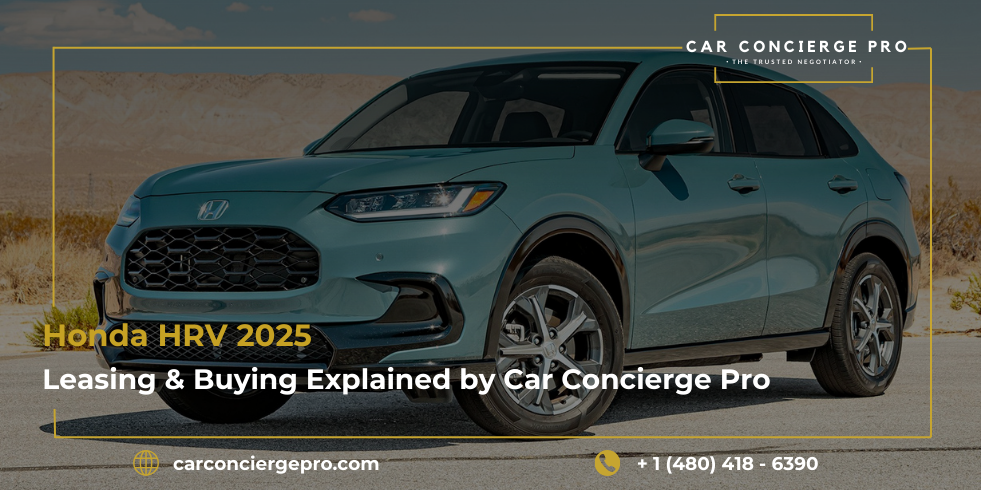
Arriving in the 2025 model year, the Honda HRV stands out in the compact SUV segment with its mix of efficient performance, advanced features, and reliable practicality. Its versatile design, efficient performance, and modern features make it a standout choice for commuters, small families, and adventure seekers alike. But for many buyers, the bigger question isn’t whether to get the HRV—it’s how. Should you lease it to enjoy lower monthly payments and flexibility, or buy it to build equity and maintain long-term ownership?
At Car Concierge Pro, we’ve helped hundreds of drivers navigate this exact decision. The best choice ultimately reflects your mileage, budget considerations, and long-term vehicle plans. Weighing the benefits and limitations of leasing and buying can protect your wallet and ensure your decision suits your long-term needs.
The HRV 2025 also excels in daily usability. Its efficient 2.0-liter engine, spacious interior, and intuitive infotainment system make it ideal for city commuting, weekend getaways, or family errands. Comfort, versatility, and reliability come together to deliver a well-rounded driving experience.
With trims ranging from LX to EX-L, the HRV accommodates varying budgets and feature needs. Safety, connectivity, and practicality remain priorities across all trims, ensuring that every driver gets excellent value for their investment.
This guide will break down the HRV’s key performance features, interior comforts, technology highlights, competitor comparisons, real-world cost comparisons, leasing vs. buying insights, and insider tips to help you secure the best deal without overpaying. By the end, you’ll have the knowledge to make an informed decision and enjoy your HRV 2025 to the fullest.
Why the Honda HRV 2025 Stands Out
Key Performance & Features
- Engine & Power: The 2025 HRV comes with a refined 2.0-liter inline-four engine producing about 158 horsepower. It provides steady acceleration suitable for city driving and highway cruising. The engine is tuned for efficiency rather than sporty performance, ensuring reliability over time.
- All-Wheel Drive Option: Honda’s all-wheel-drive system enhances traction and stability, making it a safe choice for snowy, wet, or slippery conditions. It adds confidence for families or drivers in regions with variable weather. The system engages automatically, offering seamless handling without driver intervention.
- Fuel Efficiency: The HRV delivers a combined fuel economy of 28–30 mpg, balancing cost-efficiency with practicality. Its efficient performance reduces trips to the gas station, saving money over time. Eco-conscious drivers will appreciate lower emissions compared to larger SUVs.
- Practicality & Daily Use: With a spacious interior, ample cargo capacity, and ergonomic seating, the HRV is ideal for daily commutes, family errands, or weekend trips. Controls and infotainment are user-friendly, minimizing distractions. Reliability and low maintenance costs further enhance its appeal as a dependable daily driver.
Interior Comfort & Tech
- Premium Materials & Design: Inside, the HRV offers a thoughtfully designed cabin with top-quality finishes, ensuring a comfortable experience for everyone on board. Soft-touch surfaces, ergonomic controls, and thoughtful storage solutions make the interior feel upscale for its class. The design focuses on usability and modern aesthetics.
- Infotainment & Connectivity: Most HRV trims include a 9-inch touchscreen that supports Apple CarPlay and Android Auto for easy access to apps and media. Higher trims offer wireless charging, premium audio, and enhanced connectivity features for a seamless digital experience. Voice command and touchscreen controls make interaction easy and safe while driving.
- Safety & Driver Assistance: Honda Sensing comes standard on many trims, including adaptive cruise control, lane-keeping assist, and collision mitigation. These features boost confidence during daily commutes and long drives. Advanced driver aids enhance both safety and convenience for families and urban drivers alike.
- Space & Versatility: Spacious seating and flexible cargo options make the HRV ideal for small families, commuters, or professionals with active lifestyles. Folding the rear seats expands the cargo area, making it easy to transport larger items like gear, suitcases, or bulk purchases. Comfort and utility are balanced for practical, everyday use.
Trim Levels & Pricing
- LX: Base trim with essential safety and infotainment features. Approximate starting price: $27,000. Ideal for budget-conscious buyers who want reliable daily driving without extra frills.
- Sport/EX: Mid-level trims add more comfort, tech upgrades, and styling enhancements. Starting around $29,500–$31,000. These trims balance value and features, appealing to drivers who want more than just the basics.
- EX-L / Touring: Top trims include leather upholstery, premium audio, and advanced connectivity. Price ranges from $33,000–$35,000, depending on options. Perfect for buyers seeking luxury touches, advanced tech, and enhanced comfort.
- HR-V AWD Packages: Some trims offer all-wheel drive as an optional package, improving traction and safety in varied weather conditions. Adds versatility for drivers in regions with snow or rain.
- Special Editions / Accessories: Honda occasionally offers limited editions or accessory packages with unique styling and convenience features. These trims cater to enthusiasts who want added flair and personalization.
Safety Ratings
- IIHS & NHTSA: The 2025 HRV earned top safety scores for crashworthiness and collision avoidance features. These ratings provide peace of mind for families and daily commuters alike.
Competitor Comparison
|
Honda HRV 2025 |
2.0L I4 |
158 |
Optional |
28–30 mpg |
$27,000 |
|
Toyota Corolla Cross |
2.0L I4 |
169 |
Optional |
29 mpg |
$26,500 |
|
Mazda CX-30 |
2.5L I4 |
186 |
Optional |
26–28 mpg |
$28,500 |
|
Hyundai Kona |
2.0L I4 |
147 |
Optional |
27–30 mpg |
$25,500 |
Leasing the Honda HRV 2025
Benefits of Leasing
- Lower monthly payments: Compared to financing, leasing generally reduces monthly costs by 20–30%. This makes driving a new HRV more affordable and frees up cash for other priorities.
- Frequent upgrades: Every 2–3 years, you can switch to the newest HRV with updated features. Ideal for drivers who value the latest tech, trims, and safety enhancements.
- Warranty protection: Most lease terms fall within the manufacturer’s warranty, keeping repair costs minimal and predictable.
- Business deductions: Lease payments can sometimes be claimed as business expenses, providing tax benefits for professionals using the HRV for work.
Drawbacks of Leasing
- Mileage limits: Typically 10,000–12,000 miles/year; excess mileage incurs extra fees.
- No ownership: Payments don’t build equity, and you return the vehicle at lease-end.
- Customization restrictions: Aftermarket modifications are generally not allowed or must be removed.
- Potential wear-and-tear fees: Minor damage may result in additional costs at lease-end.
Buying the Honda HRV 2025
Advantages of Ownership
- Unlimited mileage: Drive freely without penalties—great for long commutes or road trips. You won’t have to worry about extra fees, giving you complete flexibility in how much you drive.
- Long-term value: After 5–7 years, you can resell or trade in the HRV and recoup part of your investment. Proper maintenance can further enhance resale value, making ownership financially rewarding.
- Customization freedom: Personalize with wheels, accessories, or performance upgrades without restriction. You can tailor the HRV to your style, comfort, or driving preferences for a truly unique vehicle.
- Equity building: Monthly payments contribute to ownership, creating a tangible asset over time. This equity can be leveraged for future trade-ins, purchases, or even as collateral if needed.
Drawbacks of Buying
- Higher monthly payments: Financing costs more than leasing per month, which may strain budgets. Buyers need to plan carefully to ensure affordability over the full loan term. Unexpected expenses or interest rate changes can further impact monthly outlays.
- Depreciation hit: SUVs lose the most value in the first three years, impacting resale potential. Early ownership may see a significant reduction in market value, which could affect trade-in or sale price. Being aware of depreciation helps in long-term financial planning.
- Maintenance after warranty: Repairs and upkeep are your responsibility once the warranty expires. Costs for parts and labor can increase over time, especially for advanced features or specialty components. Planning ahead for maintenance ensures reliability and avoids surprise expenses.
size=3 width=”100%” align=center data-start=7682 data-end=7685>
Leasing vs Buying: Cost Comparison
- Leasing: $360/month for 36 months with $3,000 down. Total ~ $16,000 (excluding insurance/taxes). A lease typically includes warranty coverage and routine maintenance, ideal for lower upfront costs and flexibility.
- Buying: $30,000 HRV with 10% down, financed over 5 years at $550/month. After 3 years, ~$19,800 paid, with ~$15,000 equity remaining. Ownership allows unlimited mileage and vehicle customization.
Key Takeaway: Leasing saves money short-term; buying builds equity and long-term value. Your decision depends on driving habits, budget, and how long you plan to keep the HRV.
Tips from Car Concierge Pro on Negotiating Deals
Timing Your Purchase or Lease
- Shop during seasonal promotions, year-end clearance events, or manufacturer incentive periods for better discounts.
- Visit late in the month to take advantage of dealer quotas for potential added perks.
- Monitor dealership inventory for overstocked or demo vehicles, which can come with additional savings or incentives.
- Track manufacturer loyalty programs and local rebates to maximize discounts and special financing options.
Avoiding Common Pitfalls
- Don’t focus only on monthly payments: Always consider the total cost of the vehicle, including fees, taxes, and any additional charges. Focusing solely on monthly payments can hide hidden costs that affect your budget over time.
- Compare multiple dealerships: Get at least three offers before committing to a purchase or lease. Comparing options ensures you find the most competitive pricing and uncovers available incentives or special deals.
- Separate trade-in negotiations: Handle your trade-in value independently from your HRV deal. This prevents dealers from adjusting the new car price unfairly, ensuring you get a fair value for both vehicles.
- Bring pre-approved financing: Arrive with your own financing approval to strengthen your negotiating position. Dealers may match or beat your rate, giving you more leverage and potential savings.
size=3 width=”100%” align=center data-start=9042 data-end=9045>
Mini-Summary: Finding Your Best HRV Path
- Lease the Honda HRV 2025 if you want lower payments, enjoy driving the newest models, and don’t exceed average mileage. Leasing is ideal for tech enthusiasts and short-term flexibility. It also keeps maintenance and repair costs predictable, as most leases fall under the manufacturer’s warranty. You can upgrade every few years to enjoy the latest features without a long-term commitment.
- Buy the Honda HRV 2025 if you value long-term ownership, drive frequently, or want customization freedom. Building equity and long-term savings make buying more practical. Ownership allows unlimited mileage, personal modifications, and the ability to sell or trade in your HRV after several years. This option is financially smarter if you plan to keep the vehicle beyond five years.
- Car Concierge Pro’s takeaway: Leasing suits short-term flexibility, while buying delivers long-term financial sense. Your lifestyle, driving habits, and budget should guide your choice. Careful evaluation of your needs ensures you maximize value, avoid unexpected fees, and enjoy the HRV 2025 confidently. Making an informed decision today saves money and stress tomorrow.
Conclusion
The Honda HRV 2025 continues Honda’s reputation for reliability, smart design, and excellent resale value. Understanding financial implications, trim options, competitor positioning, and negotiation strategies ensures you maximize your investment. With expert insights from Car Concierge Pro, you can confidently lease or buy the HRV that fits your driving needs, lifestyle, and budget.
Whether you prioritize short-term flexibility through leasing or long-term value with ownership, being informed allows you to make a choice that aligns with your goals. Careful planning, research, and leveraging available incentives ensure that your Honda HRV 2025 delivers both enjoyment and smart financial sense for years to come.
size=3 width=”100%” align=center data-start=10079 data-end=10082>
FAQs
- Is leasing the Honda HRV 2025 worth it?
Ideal for those who prefer affordable monthly payments and frequent upgrades, leasing also ensures minimal repair costs thanks to coverage under the manufacturer’s warranty.
- How much is the Honda HRV 2025 base price?
The HRV LX starts around $27,000, while mid-level trims range $29,500–$31,000. Top trims like EX-L/Touring can go up to $35,000 depending on options.
- Can I customize my HRV under a lease?
Typically, leased vehicles cannot be modified permanently. Any aftermarket additions must usually be removed to avoid fees at lease-end.
- What is the resale value of the HRV after 3–5 years?
With careful upkeep and moderate mileage, Honda HRVs can preserve 50–60% of their initial price, enhancing resale and trade-in value.
- How fuel-efficient is the Honda HRV 2025?
The HRV delivers a combined fuel economy of 28–30 mpg, making it ideal for daily commuting and long drives. AWD models may slightly reduce overall mileage but improve traction and safety.
- What are the mileage limits for leasing the HRV 2025?
Standard leases typically allow 10,000–12,000 miles per year. Exceeding the limit incurs extra fees, so consider your annual driving habits before choosing a lease.
- Should I lease or buy if I drive long distances?
Buying is usually better for high-mileage drivers since leases have mileage caps. Ownership also allows you to build equity and customize your HRV freely without restrictions.