













In this article
A $750 monthly quote on a mid-priced EV is where this story starts. The buyer had already left a deposit and signed a document he thought was a receipt. What follows is the call that established what was actually still negotiable, and the three numbers that decide any lease payment.
By Raja Rajeswari M | SEO by Ravi Vaja
KEY TAKEAWAYS
- A deposit and a purchase agreement are not a lease contract. Until the multi-page finance paperwork is signed, the terms remain open.
- The monthly payment is an output. It's calculated from the money factor, the cap cost reduction, and the residual value.
- Manufacturer-to-dealer lease cash exists and isn't always mentioned. It's worth asking about by name.
- Strong credit should produce a low money factor. If it doesn't, the rate has room.
- The trade-in conversation waits until the lease terms are locked, or the two numbers become one.
- Where to watch. The full discovery call is available on the YouTube link below.
Every CCP engagement is backed by a 30-day money-back guarantee (terms apply).
A Deposit Is Not a Lease Contract
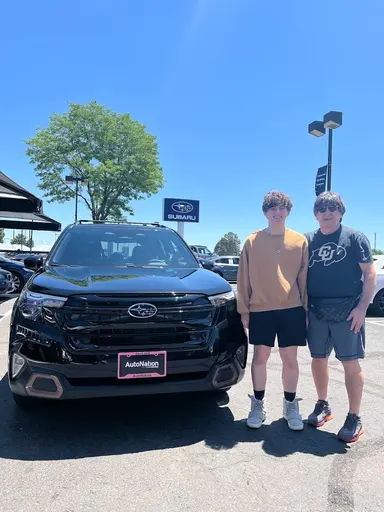
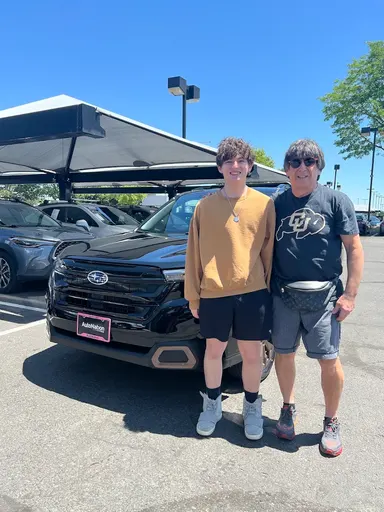
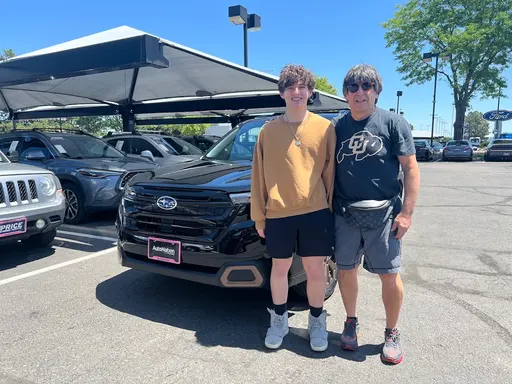
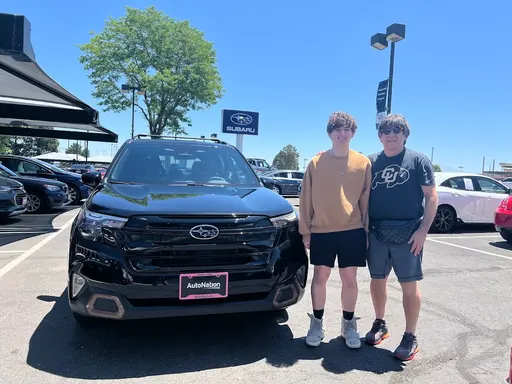
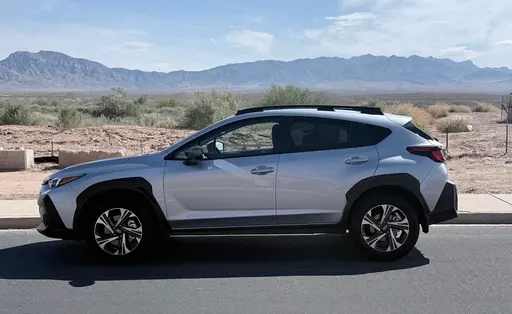
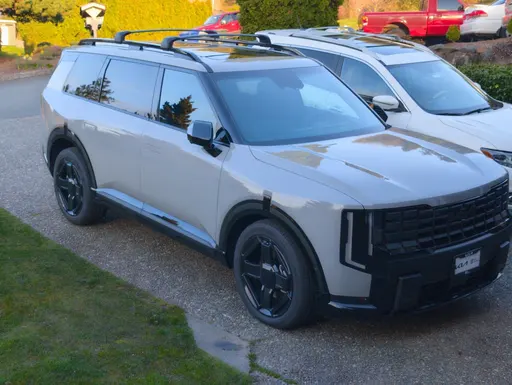
Nolan had done more homework than most buyers. He'd test-driven a competing EV, decided against it, driven the 2026 Subaru Trailseeker instead and liked it considerably more. He'd tracked the dealership's online inventory long enough to know the model was moving quickly, which is why he moved to secure one.
He put down a $500 deposit on a credit card. A document came across the desk mid-conversation, and he signed it assuming it was the receipt. It was a vehicle purchase agreement. He only realized later, and it was an unwelcome discovery.
It didn't need to be. A vehicle purchase agreement is not a lease contract. The lease contract is the ten- to fifteen-page document that comes at the end, and he hadn't seen it, let alone signed it. Every number was still open.
Explore the full Car Leasing Concierge service to see how a lease engagement is structured.
Behind Every Great Deal Is One Team. Meet Car Concierge Pro
Neel Mehta is the founder and chief negotiator at CCP, a TEDx speaker, and a Biomedical Informatics graduate from Arizona State University.
He came to this from outside the automotive world. His own first car purchase in the United States produced a different price at every dealership he visited, and friends and family started asking him to handle theirs. That demand became the business.
CCP is an asset-light consulting firm with no inventory of its own to move, no dealership affiliations, and no manufacturer relationships. The client is the only party who pays.
The numbers behind the team:
- 1,200+ clients served
- $6.14M+ negotiated in client savings
- 120 reviews at a 4.8 rating
- BBB A+ accredited
- Two 2025 Corporate Vision Awards
- USA, Canada, and UAE, with a full-time team of 14
The full discovery call is available above.
What Have You Actually Committed To?
Three separate things get signed during a car transaction, and only one of them is binding on price.
This matters enormously, and almost nobody explains it at the desk.
A deposit holds the vehicle. It stops it being sold to someone else while you decide. Paid on a credit card, it also carries the protections a credit card provides.
A vehicle purchase agreement identifies a specific car and records your intention. It is not a finance contract, and it doesn't lock a monthly payment.
The lease contract is the ten to fifteen-page document containing the money factor, the residual value, the term, the mileage allowance, the disposition fee, and every charge. This is the binding one.
On this engagement, the position was: deposit paid, purchase agreement signed, lease contract not seen. No credit application submitted, which confirmed no credit pull had happened.
That meant the entire financial structure of the deal was still open.
If you're in a similar position, establish these four things before anything else: what exactly you signed, whether a credit application went in, how long the deposit holds the vehicle, and whether you've committed to a collection date.
Why the Monthly Payment Is the Wrong Number
$750 a month on a mid-priced EV is high, and knowing that is different from knowing why.
The monthly payment is an output. It's produced by three figures that rarely enter the showroom conversation, and negotiating the payment without touching those figures achieves very little.
Money factor
The lease equivalent of an interest rate, written as a decimal like 0.00125. Multiply it by 2,400 for the approximate APR.
Ask for it by name. Then ask for the buy rate, which is what the bank sets for the dealership. The two are not always the same number, and the gap between them is negotiable like anything else.
Cap cost reduction
A discount applied to the vehicle's selling price before the lease calculation begins. Every dollar removed here comes off every payment for the entire term.
This is where most of the available money sits, and it's the figure Nolan had correctly identified himself.
Residual value
What the vehicle is projected to be worth at lease end. A higher residual means a lower payment, because you're only paying for the depreciation in between.
You can't move this number directly. It's set by the leasing bank. But it shifts with term length and mileage tier, so those are worth pricing rather than accepting.
Settle all three before discussing a monthly figure. Once they're locked, the payment is simply arithmetic.
What Is Lease Cash, and Should You Ask About It?
Yes, and by name.
Manufacturer incentives on a lease come in more than one form, and they're not all advertised the same way.
Customer-facing rebates appear in advertising. State EV incentives, loyalty offers, and manufacturer rebates fall here, and buyers generally know to ask.
Manufacturer-to-dealer lease cash is support paid to the dealership rather than promoted to the public. It exists to make a particular model more competitive in a given month, and it can be applied to your deal.
Nolan had come across online figures indicating substantial combined lease cash for this model that month, along with a state rebate and a manufacturer rebate. Those specific figures weren't independently verified during the call, but the category is real and worth raising.
Two questions worth asking directly:
- What manufacturer lease cash is available on this model this month?
- Which incentives can be applied together, and which are mutually exclusive?
That second question matters more than most buyers realize. Some incentives stack. Others don't, and being asked to choose between a rate promotion and a cash rebate is common.
Does Strong Credit Guarantee a Low Rate?
It should, and if it doesn't, that tells you something useful.
As a working benchmark: on strong credit, a money factor above 0.002 suggests a better rate is available. Multiply by 2,400 and 0.002 works out to roughly 4.8% APR.
But a good score only helps if you use it. The rate you're quoted isn't handed down automatically from your credit file. It's presented, and presentation is negotiable.
One practical protection. Multiple credit applications across several dealerships stack hard inquiries on your file, at precisely the moment you want your score holding steady. A structured engagement negotiates on price and terms alone, with a single application submitted at the very end, to the dealership actually chosen.
Should You Discuss Your Trade-In at the Same Time?
No. Lock the lease terms first, then introduce the trade-in as a separate conversation.
This is the sequencing rule that protects more money than any other, and Nolan's situation illustrates exactly why.
He had a mid-size SUV to trade. The dealership opened at $18,000 and moved to $20,000. His own research suggested closer to $21,500, and comparable examples in his area were listed in the $26,000 to $27,000 range. The vehicle carries some cosmetic damage that legitimately affects value, though it's mechanically sound.
Here's the problem with combining the two conversations. When a new vehicle and a trade-in are discussed together, they stop being two transactions and become a single figure. That figure can be rearranged. A generous-looking lease payment can be funded by a conservative valuation on the car you're handing over, and the headline improves while the total doesn't.
The sequence that works:
- Negotiate and lock the lease terms
- Only then introduce the trade-in for appraisal
- Measure that appraisal against independent offers rather than accepting it alone
- Compare a dealer trade against a private sale on the net figure
There's a tax point too. In most states, a trade-in reduces the amount your new transaction is taxed on. That's why a slightly lower trade offer can still net out better than a higher private sale price.
You can benchmark your own vehicle with the Kelley Blue Book valuation tool before any appraisal conversation.
What If Your Vehicle History Report Is Wrong?
Dispute it, because it directly affects what you're offered.
Nolan's report contained two errors. It recorded damage on a panel that has never been damaged, alongside the damage that genuinely exists. And it listed two previous owners, when in fact he leased the vehicle and then bought it out, the same person throughout.
Both errors reduce a car's apparent value. A second owner suggests more hands and less continuity. Phantom damage suggests a history that didn't happen.
What to do:
- Request a copy of the report rather than accepting a summary of it
- Read the ownership section, not just the accident section
- Contact the reporting service directly with evidence to correct errors
- Bring the correction to the appraisal conversation
Vehicle history reports are compiled from many sources and errors do occur. They're correctable, but only if someone notices them.
Which Mileage Tier Should You Choose?
The one that matches your actual driving, plus a modest buffer.
Standard tiers usually run 10,000, 12,000, and 15,000 miles a year.
Nolan settled on 12,000. He has a second vehicle and expects to drive less than that, but the difference in monthly payment between 10,000 and 12,000 is small, while the difference between 12,000 and 15,000 is more significant.
The reason to build in headroom: overage charges at lease end typically run 25 to 40 cents per mile. Two thousand miles over the allowance is a meaningful bill, and it arrives three years later when you have no negotiating position at all.
Also worth checking before signing: the disposition fee at return, early termination terms, and the wear-and-tear standard. All three are reviewable at signing, and none of them are negotiable at return.
Practical Checks Before Leasing an EV
Charging access decides whether an EV works for you, and it's worth resolving before you sign rather than after.
Nolan's situation covered both ends of the spectrum, which makes it a useful example. One location had limited electrical service, ruling out a Level 2 charger, though a standard 120-volt outlet worked for slow overnight charging and public charging was within walking distance. Another had sufficient service for a Level 2 installation, confirmed by an electrician, which mattered because public charging in that area is sparse.
What to establish before committing to any EV lease:
- Your electrical service capacity, confirmed by an electrician rather than estimated
- Whether Level 2 installation is possible, and what it costs
- Public charging within reasonable distance of where you park
- Realistic range for the model, not the advertised figure
- Charging availability along routes you actually drive
On fast charging and battery health, the research is broadly reassuring. Frequent DC fast charging may have some effect over five or six years of heavy use, but over a typical three-year lease the impact is generally minor. For a leased vehicle, it's rarely the deciding factor.
How the Negotiation Actually Works
By reaching the people who can approve a reduction, and by not announcing yourself.
A frontline salesperson usually cannot move a price meaningfully. The authority sits further up.
The escalation path:
- Build rapport with the salesperson handling the file
- Move to the internet sales manager
- Then the finance director
- Then, where necessary, senior dealership management
Two things matter about how this is done.
Tone. Effective negotiation isn't aggressive. Nolan raised exactly this concern, worried that an aggressive negotiator might sour a relationship he'd built on a vehicle that's genuinely hard to find. It's a fair worry and a common one. The approach that works is one where the other side doesn't feel negotiated at.
Timing. Best pricing rarely arrives on day one. It surfaces on day three or four, once a dealership recognizes a serious buyer. A minimum of three working days is realistic, and a process compressed below that gives away the only leverage you have.
Can You Negotiate After Placing a Deposit?
Yes, provided you haven't signed the lease contract.
This is worth stating plainly, because a great many buyers assume a deposit ends the conversation. It doesn't.
What a deposit does: holds the vehicle and stops it being sold to someone else.
What a deposit does not do: fix the money factor, fix the selling price, fix the residual, fix the mileage tier, or fix the monthly payment.
Every one of those is settled in the lease contract, and until that's signed, all of them remain open.
One thing to protect. If a vehicle is genuinely scarce in the configuration you want, the goal is a better deal on that specific car, not a lost deal. The negotiation should never put the vehicle at risk. That's a matter of approach, and it's the difference between an experienced negotiator and an argumentative one.
The Car Concierge Pro Difference
- Paid only by the client, never by a dealership, manufacturer, or lender
- Money factor, cap cost reduction and residual negotiated individually, not as a payment
- Buy rate requested alongside the offered rate on every engagement
- Lease terms locked before the trade-in conversation begins
- Manufacturer and dealer lease cash identified and applied
- One credit application, submitted at the end, to the chosen dealership only
- Escalation to the people with authority to approve a reduction
- Full review of the closing contract before signature
- 18+ platform search plus direct outreach across neighboring states where needed
- Support through to delivery, so the negotiated deal is the delivered deal
Every engagement is backed by CCP's 30-day money-back guarantee. Terms apply.
Real CCP Client Savings
| Vehicle | Client savings |
|---|---|
| Hyundai Tucson | $3,500 |
| Lexus GX550 | $3,800 |
| Lexus NX350h | $4,500 |
| BMW X3 | $7,592 |
| Audi S5 Coupe Premium Plus | $8,070 |
Every result reflects a real CCP client engagement. Names and identifying details are withheld for privacy.
Read more client journeys at Client Stories.
Sound Like You?
- You've been quoted a monthly lease payment that feels high and can't tell why
- You've placed a deposit and assume the terms are now fixed
- You have strong credit and want it reflected in the rate
- You have a trade-in and want it valued properly rather than folded into the deal
- You've found a vehicle that's genuinely hard to source and don't want to risk it
- You want the closing contract read by someone who reads them weekly
Frequently Asked Questions
1. Is a vehicle purchase agreement the same as a lease contract?
No. The purchase agreement records intent. The lease contract is the ten- to fifteen-page document containing every number that binds you.
2. What is a good money factor?
On strong credit, at or below 0.002. Multiply by 2,400 for the rough APR, and ask for the buy rate too.
3. What is lease cash?
Manufacturer support on a lease, either customer-facing or paid to the dealership. Ask what's available this month and which incentives can be combined.
4. Should I trade in or sell my car separately?
Compare both on the net figure. Check yours first with the Kelley Blue Book valuation tool, since a trade-in also reduces sales tax in most states.
5. What mileage allowance should I choose on a lease?
Your realistic annual distance plus a small buffer. Overage runs 25 to 40 cents per mile at lease end.
6. Do I need a home charger to lease an EV?
Not always, but confirm your options first. A Level 2 charger needs sufficient electrical service, and a standard outlet only adds a few miles overnight.
7. Should I check anything on the vehicle itself?
Yes, and it's free. Run the VIN through the NHTSA recall lookup for open safety recalls, which apply to new vehicles too.
What Nolan Almost Signed
What stood out in this call wasn't the $750 quote. It was how close Nolan came to accepting it, purely because he didn't know which questions to ask.
He'd researched the vehicle thoroughly. He'd tracked inventory. He'd read up on lease cash. What he hadn't done was ask for the money factor by name, request the buy rate, or separate the trade-in from the lease. Nobody had told him those were the levers.
That's the actual gap. Not intelligence, and not diligence. Just the specific vocabulary of a transaction most people complete every few years.
The good news in his case was that almost nothing was closed. A deposit and a purchase agreement look final and aren't. The document that binds you hadn't been produced yet, which meant every number was still on the table.
So here's the question worth sitting with: on your last lease, do you know what your money factor was, or only what your payment was?
Tell us in the comments, or schedule a complimentary 30-minute consultation.
📞 +1 (480) 418-6390 🌐 carconciergepro.com
Every CCP engagement is backed by a 30-day money-back guarantee (terms apply).