

































In this article
Many Australians are holding onto their cars for longer these days, making long-term reliability a top priority. While a shiny coat of paint and a clean interior are nice, your car’s true value and how long it lasts really come down to its mechanical heart: the drivetrain.
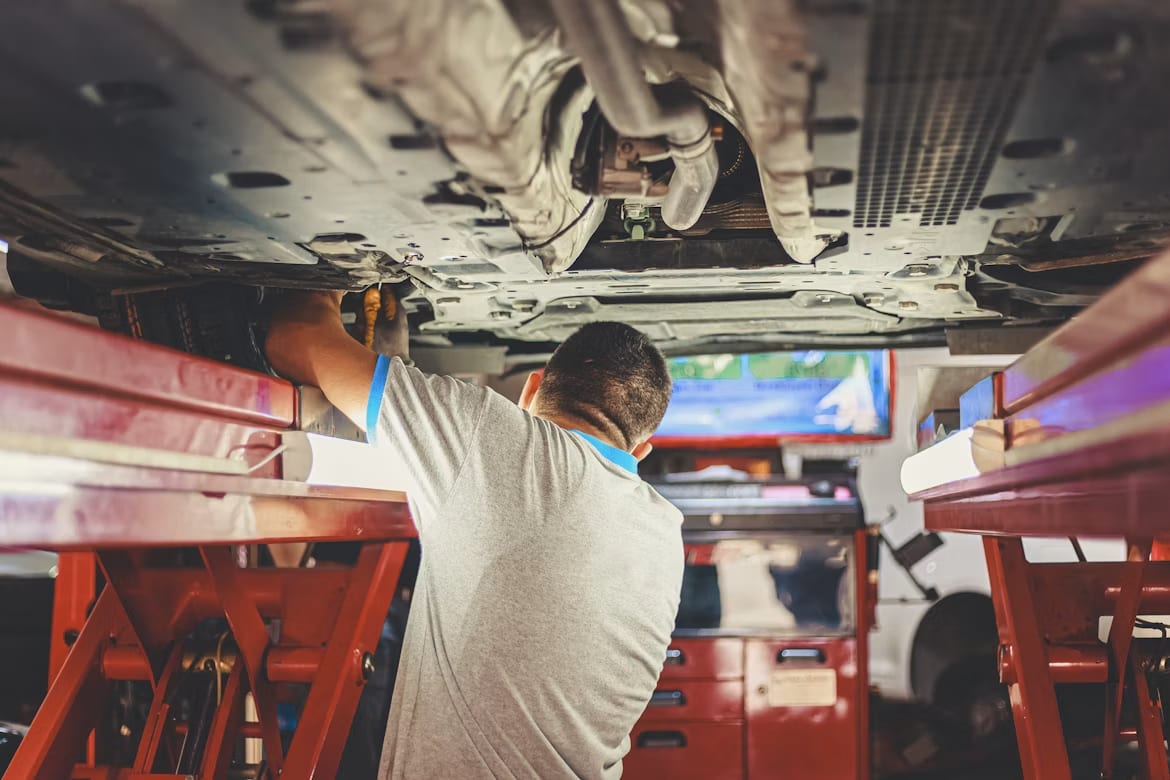
This complex system is what gets power from your engine to the wheels. Protecting it is one of the smartest investments you can make in your car’s future. Since people are keeping their cars longer, understanding how to care for these core components isn’t just for car enthusiasts anymore; it’s for every smart owner.
Understanding Your Drivetrain
Think of the drivetrain as the “chain of command” that turns engine power into forward motion. It’s not just one part, but a collection of crucial components all working together. It starts with the engine, goes through the transmission (or gearbox), travels down the driveshaft to the differential, and finally reaches the wheels via the axles.
Each part has a specific job. The transmission manages gear ratios to control speed and torque, while the differential lets the wheels spin at different speeds when you turn a corner. Whether you drive a front-wheel drive, rear-wheel drive, or all-wheel drive vehicle, this entire system is constantly under stress. Knowing how it basically works helps you understand why keeping it healthy is so vital for a smooth, reliable ride.
Maintenance for Longevity
Taking care of your drivetrain before problems start is key. It can save you from huge repair bills later on. Sticking to a consistent maintenance schedule is the best way to protect these expensive parts. This includes:
- Fluid Checks: Your transmission and differential need special fluids for lubrication and cooling. Regularly check your transmission fluid; it should look reddish and clear, not dark brown or burnt-smelling.
- Scheduled Servicing: Your car’s logbook has a manufacturer-recommended schedule for servicing drivetrain components. This often includes fluid changes at specific kilometre marks. Don’t skip these.
- Inspections: Ask your mechanic to check for leaks around the transmission pan, axles, and differential during your regular services. Catching a small leak early can prevent a major breakdown.
For older cars or those showing significant wear, a full service might not be enough. In these cases, gearbox reconditioning can be a cost-effective way to get factory performance back and extend the vehicle’s life for many more years. Following an essential maintenance guide for your whole car makes sure no critical system gets missed.
The Impact of Driving Habits
How you drive directly impacts how long your drivetrain lasts. Aggressive habits like hard acceleration from a standstill, sudden braking, and harsh gear changes put huge strain on the transmission, driveshaft, and axles. Every time you slam the accelerator, you’re sending a shockwave through the entire system.
To reduce wear and tear, try driving more smoothly. Accelerate gently, anticipate stops to avoid sudden braking, and let the car come to a complete stop before shifting from Drive to Reverse. If you tow a caravan or boat, be mindful of your vehicle’s towing capacity. Overloading your car puts enormous stress on the transmission and can lead to overheating and early failure.
When to Seek Professional Help
Your car will usually give you warning signs when something is wrong with the drivetrain, which is why essential car care is so important. Ignoring these can turn a small issue into a big, expensive repair. Watch out for any of these symptoms:
- Unusual Noises: Whining, humming, or clunking sounds that change with speed or during gear shifts are a red flag.
- Slipping or Delayed Gears: If your automatic transmission hesitates, revs high before engaging a gear, or feels like it’s slipping, it needs immediate attention.
- Vibrations: A vibration you can feel through the floor or steering wheel, especially when accelerating, could point to a problem with the driveshaft or axles.
- Leaking Fluid: Puddles of red or dark brown fluid under your car are a clear sign of a transmission leak.
If you notice any of these signs, it’s best to see a specialist mechanic as soon as possible.
Boosting Resale with Care
A well-maintained drivetrain is a huge selling point. When a potential buyer takes your car for a test drive, a smooth-shifting transmission and a quiet, vibration-free ride build confidence. On the other hand, a car that jerks between gears or makes strange noises is an immediate turn-off.
Keeping detailed service records that show regular transmission servicing and any necessary repairs proves you’ve looked after the vehicle properly. This documentation provides clear proof of maintenance, letting you ask for a higher price and making your car much more appealing than a similar model with a questionable history. In a competitive used car market, a solid mechanical history makes your vehicle stand out.
Protecting your car’s drivetrain isn’t just about avoiding repairs; it’s about keeping its performance, safety, and value intact. A little care and attention to how you drive and maintain your vehicle will pay off for years to come, ensuring it stays a reliable asset.