

















In this article
Getting into an accident in Nevada is stressful enough without wondering what it's going to do to your insurance bill. The honest answer is that it depends a lot on fault, but even drivers who did nothing wrong aren't always spared. Nevada already carries some of the highest insurance costs in the country, and an accident on your record, at-fault or not, tends to push that baseline even higher.
We looked at recent rate data to understand exactly what happens to a Nevada premium after different kinds of accidents, and how long that impact typically sticks around.
Nevada's Starting Point Is Already High
Before getting into what an accident does to your rate, it helps to understand the baseline. According to a 2026 LendingTree study, Nevada is currently the most expensive state in the country for full coverage car insurance, averaging around $335 a month compared to a national average closer to $208. That gap alone puts Nevada drivers in a tougher starting position than most of the country before any accident even enters the picture.
Nevada insurers raised premiums by an estimated 6.42 percent in 2026, following an even steeper 13.65 percent increase in 2025. Over 500,000 Nevada policyholders saw rate hikes at the start of the year alone, many without filing a single claim. Rising repair costs, population growth, and dense traffic in areas like Clark County all factor into why Nevada's baseline keeps climbing even before an individual driver's record comes into play.
What Happens After an At-Fault Accident
A single at-fault accident carries a real financial impact in Nevada. According to MoneyGeek's 2026 rate analysis, a driver's full coverage premium jumps to around $241 a month after an at-fault accident, up from a clean-record baseline of roughly $158 a month. That's an increase of over 50 percent, and it's close to what a DUI conviction does to a Nevada premium, which brings the average up to around $245 a month.
The size of the increase generally reflects the severity of the accident. A minor fender bender with limited property damage tends to carry a smaller bump than a collision involving injuries or a total loss. Either way, the increase typically stays on your record and affects your pricing for three to five years, depending on the insurer and the specific circumstances of the crash.
What Happens Even If You Weren't at Fault
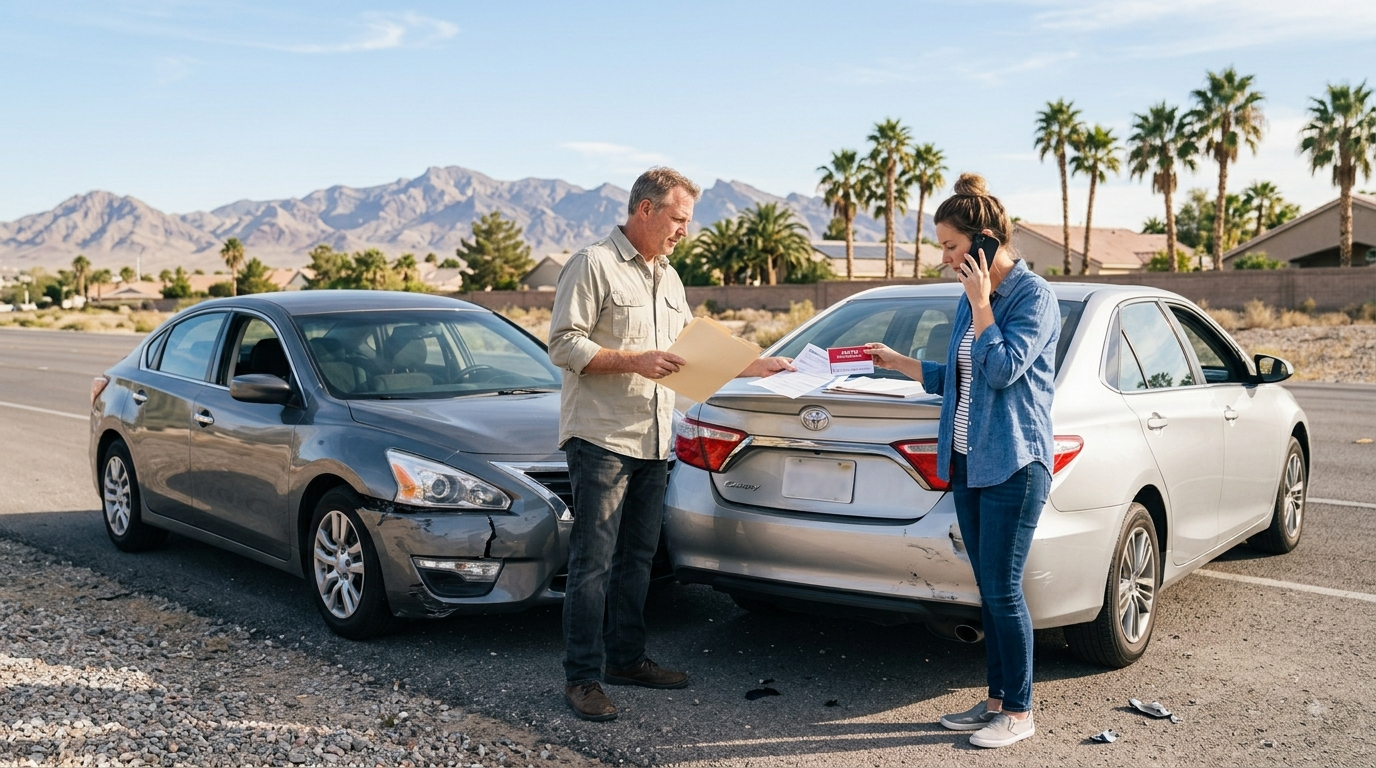
This is the part that catches a lot of Nevada drivers off guard. Nevada insurers apply a surcharge even to drivers who weren't responsible for their accident. A clean-record driver who gets hit by someone else still sees their premium rise to around $175 a month, about $17 more than the baseline, simply for having an accident on file at all.
That might not sound like much on its own, but it adds up to roughly $204 extra a year for a situation the driver had no control over. Insurers generally justify this by pointing to the statistical correlation between having any accident on your record, regardless of fault, and the likelihood of future claims. It's a frustrating reality for drivers who did everything right and still ended up paying more.
Why Nevada's Situation Is Especially Steep Right Now
Nevada's overall rate environment makes accident-related increases hit even harder than they might elsewhere. Nevada's traffic fatality rate actually rose 17 percent in the first half of 2024, bucking a national trend that saw fatalities decline. Clark County alone reports more than 20,000 crashes annually, a volume driven partly by heavy tourism traffic layered on top of a large resident population.
Insurers price based on local risk rather than national trends, which is part of why Nevada premiums have stayed elevated even as national rate increases have slowed. A driver in Las Vegas dealing with an at-fault accident is absorbing both the accident surcharge and an already climbing statewide baseline at the same time, which compounds the total impact more than it would in a state with more stable pricing.
What Nevada Drivers Are Experiencing
People dealing with this firsthand tend to describe the frustration pretty directly. "I got rear-ended on the 215 Beltway last year, it wasn't my fault at all, and my rate still went up at renewal," said Marisol, a Las Vegas resident. "It didn't make sense to me until my agent explained that just having an accident on file changes how they price you, regardless of fault." Another driver, Terrence, who had a minor at-fault fender bender near the Strip, said the jump was bigger than he expected. "I figured a small accident would mean a small increase. It was more than 50 percent higher at my next renewal, and that stuck around for a few years before it started coming back down."
What You Can Actually Do About It
A few things genuinely help offset the impact of an accident on a Nevada policy. Staying accident-free for as long as possible afterward is the most direct path back to lower pricing, since most surcharges fall off within three to five years. Some insurers offer accident forgiveness programs that prevent your first at-fault accident from triggering a rate increase at all, which is worth asking about before you need it rather than after.
Shopping around matters more in Nevada than in most states, given how much rates vary by company for identical driving records. Comparing quotes for car insurance Nevada drivers can realistically qualify for after an accident, rather than accepting a single renewal number, is one of the more effective ways to soften the financial hit, since pricing for drivers with an accident on record can differ significantly between insurers.
Nevada's rate environment shows no clear sign of cooling off soon, and accidents will likely continue to carry a meaningful cost regardless of fault. Understanding how the surcharge system actually works, rather than being surprised by it after the fact, at least puts drivers in a better position to plan around it.