


























In this article
Electric-car shoppers often arrive at a dealership knowing the advertised range, battery size and 0-60 mph time. Those figures help narrow the shortlist, but they cannot reveal everything about how an EV will feel after months of commuting.
The electric motor, inverter, gearbox and control software work as a system. Their behaviour shows up in small everyday moments: pulling into traffic, creeping through a car park, climbing a hill or accelerating onto a highway. A thoughtful test drive can reveal much more than a quick demonstration of straight-line speed.
1. Check low-speed response
Start in a safe, quiet area. Move away gently, then lift off the accelerator and repeat. Does the car respond predictably, or does it feel abrupt when you ask for only a small amount of power?
Electric motors can deliver torque quickly, but the manufacturer decides how the pedal is mapped and how much torque is available at low speed. Smoothness is therefore not simply a question of motor power. It is also a matter of calibration.
Try parking manoeuvres and stop-and-go traffic if the route allows. These are situations in which a refined control system becomes noticeable every day.
Try the same gentle manoeuvre in the normal driving mode you would use every day. A strong sport setting can make a car feel exciting during a short demonstration but unnecessarily sensitive in a crowded car park. If the vehicle has an adjustable creep function or one-pedal mode, ask the salesperson to explain how it works before testing it. Predictability matters more than instant response when manoeuvring around pedestrians or narrow spaces.
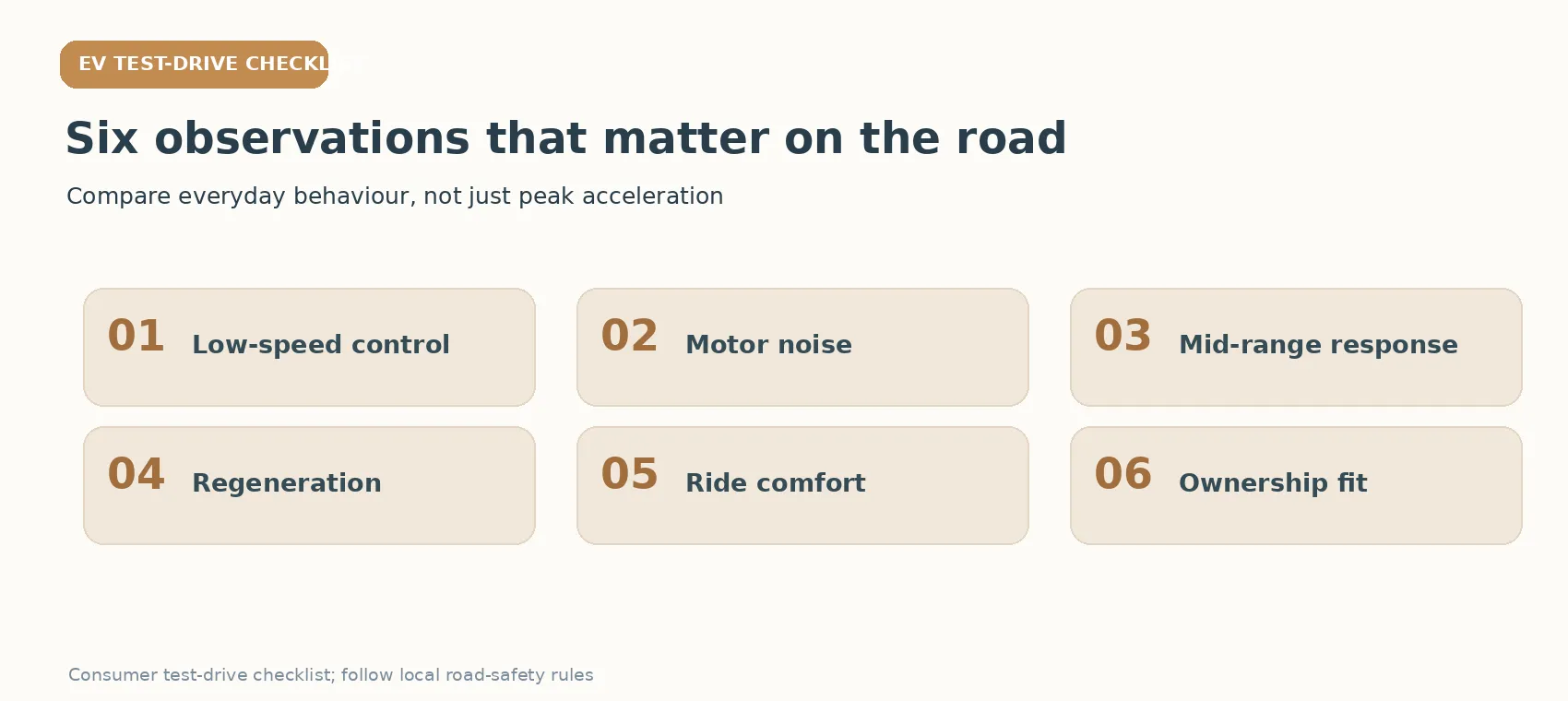
Figure 1. Practical EV test-drive checkpoints.
2. Listen at several speeds
With no petrol engine masking other sounds, EV drivers may notice a high-pitched whine from the motor or reduction gearbox. A modest, consistent sound is not necessarily a defect. A sudden change in tone, harsh vibration or new mechanical noise deserves more attention.
The design and manufacture of electric vehicle stator and rotor cores can influence the electromagnetic forces inside a motor, while the gearbox, mounts, tyres and body structure also contribute to what reaches the cabin. It would be misleading to blame every noise on the motor itself.
Listen on a smooth road and a coarse road surface. That helps separate powertrain sounds from tyre and wind noise.
Pay attention to when a sound appears. Does it change with road speed, accelerator demand or road surface? A noise that follows vehicle speed may have a different origin from one that becomes noticeable only under power. Do not attempt to diagnose it yourself during the drive; record the conditions and ask the dealer to investigate any persistent or unusual behaviour. Comparing the same model on a second vehicle can sometimes help distinguish normal characteristics from a particular car's condition.
3. Compare acceleration beyond the launch
An impressive 0-60 mph figure does not tell you how a car responds when joining a fast-moving road or overtaking at motorway speed. Ask for a safe demonstration of mid-range acceleration and pay attention to how steadily the car delivers power.
The motor's torque-speed characteristics, gearing, battery power limits and thermal management all affect performance. Some cars prioritise a strong initial surge, while others deliver a more progressive response.
If you are comparing two models, drive them over similar routes and in similar modes. Sport and Eco settings can change pedal response enough to make an unfair comparison misleading.
4. Understand the motor without becoming an engineer
Most buyers do not need to know every part inside an EV drive unit. It helps, however, to understand that many motors use laminated electrical-steel cores rather than solid steel. The laminated construction is designed to manage magnetic flux and limit certain electrical losses.
The manufacturing of EV motor lamination stacks involves choices about steel grade, geometry, cutting and assembly. These choices can affect the efficiency and consistency of the motor, although the final vehicle result also depends heavily on the inverter, cooling system and software.
This is a useful reminder not to assume that two cars with similar horsepower figures contain equivalent powertrains.
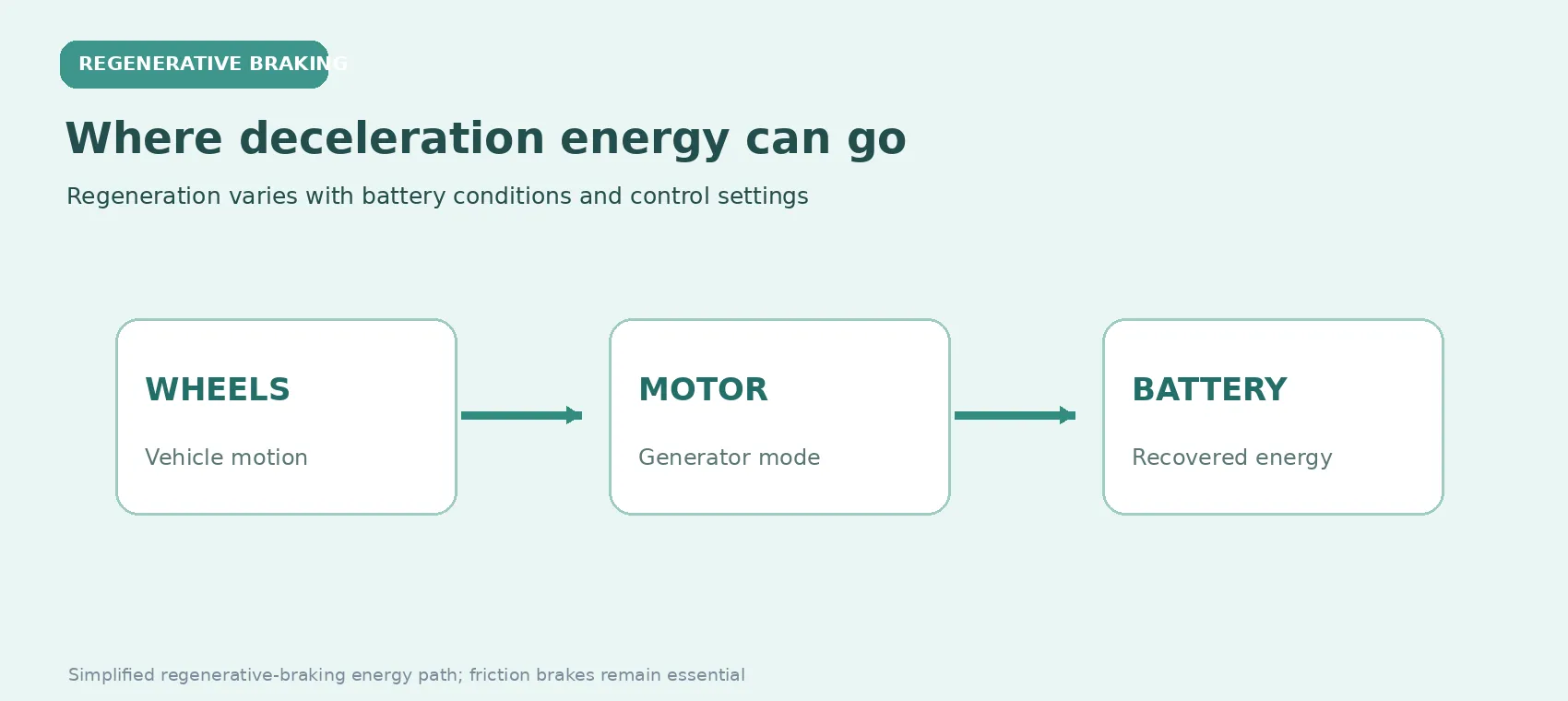
Figure 2. Simplified regenerative-braking energy flow.
5. Try the braking and regeneration settings
Regenerative braking recovers some kinetic energy when the car slows down, but the amount available depends on vehicle settings, battery temperature, state of charge and road conditions.
Try the different regeneration modes if the vehicle offers them. Notice whether the transition between regenerative and friction braking feels natural, especially at low speeds. Drivers who prefer coasting may favour a different setup from those who enjoy strong one-pedal driving.
Remember that braking feel is a vehicle-level design choice, not a direct measure of motor quality.
Because regeneration can vary with battery state and temperature, test the vehicle's conventional braking response as well. The brake pedal should feel consistent and the car should slow predictably. Ask how the car behaves when the battery is full, whether the selected regeneration mode is remembered between journeys and how one-pedal operation changes at very low speed. These details often influence daily comfort more than the headline amount of energy a vehicle claims to recover.
6. Ask about the ownership experience
Before committing, ask about warranty coverage for the drive unit and high-voltage battery, service intervals, software updates and the availability of qualified repair facilities. Read the actual warranty exclusions rather than relying on a verbal summary.
For a used EV, request available service history and diagnostic information, and consider an independent inspection by a technician familiar with high-voltage vehicles. A pleasant test drive is valuable, but it cannot replace a proper condition assessment.
Finally, compare real-world energy consumption and charging options for your normal journeys. A car that feels brilliant for ten minutes still needs to fit your daily routine.
Bring a short list of real journeys and charging constraints to the appointment. If you regularly drive on motorways, ask for an independent consumption estimate at higher speeds. If you park on the street, understand the available charging options and likely costs. For a family car, test the rear seats, child-seat access and luggage space rather than treating drivetrain performance as the only decision. An EV should be evaluated as a complete vehicle that fits the household's routine.
Choose the EV that feels right at ordinary speeds
A successful EV test drive is not a contest to see which car accelerates hardest. It is a chance to judge how naturally the vehicle responds, how comfortable it sounds and how confidently it behaves in the situations you encounter most often.
Use the specification sheet to build your shortlist, then let a careful drive and a thorough ownership review help you make the final decision.