




In this article
The clearest way to explain how lease negotiation actually works is to walk through a real one, with the figures left in.
This is Rachel's deal. She is a Scottsdale-area client whose Cadillac Lyriq lease was ending in under two weeks, and she came to us with a single number in mind: $300 a month. The dealership's quote on the car she wanted was $429.
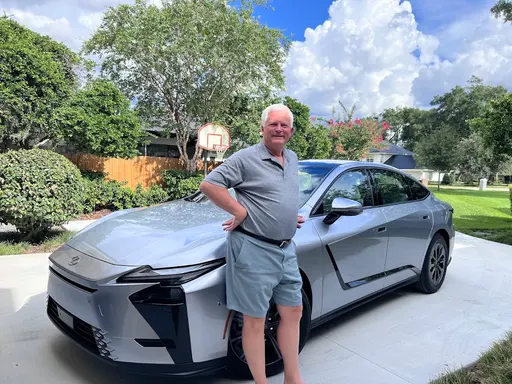
Four business days after she onboarded, she picked up a 2026 Cadillac Optiq at $300 a month. That is $129 a month, or just over $3,000 across the term.
Here is how the gap got closed.
The short version
The fastest way to bring a lease payment down is to separate the vehicle's price from the lease terms completely. Negotiate the price first, as if you were buying the car outright. Only then deal with the money factor, the residual value and the down payment, each as its own conversation.
Almost nobody does this, because the dealership asks a question that prevents it within the first two minutes.
Why most lease negotiations start in the wrong place
The question is: "are you leasing or financing?"
It sounds like paperwork. It is not. It gets answered before the vehicle's actual price is pinned down, which means the negotiation begins on the dealership's framing rather than yours. Once a monthly payment is the unit of discussion, the numbers behind it can move freely — selling price, money factor, term, down payment — and the payment can stay exactly the same while the value shifts toward the dealer.
Rachel avoided this entirely, and the way she did it is worth copying:
- A firm target. $300 a month, lease or finance. The structure was negotiable; the number was not.
- Flexibility on the vehicle. Several models were acceptable as long as the number held.
- No financing conversation before price. This is the posture that creates leverage, and it is the one most buyers give away first.
The starting point: several vehicles, one budget
Rachel wanted to stay in an EV. She had three candidates:
- Cadillac Optiq — new lease
- Chevy Equinox EV — a pre-owned example listed at a Tempe dealership
- Chevy Blazer EV — a backup
Rather than committing to one car, she gave us a target payment and a set of preferences — colour, interior, must-haves such as Apple CarPlay — and let us compare the options against each other.
That choice is the whole negotiation in miniature. Tell one dealership that one specific car is the only car, and it knows immediately that it holds the leverage. Run several vehicles and several dealerships at once, and the leverage inverts: every dealer in the mix knows there is real competition for the sale, and it changes how hard they work to win it.
What we told the dealership about us: nothing
Rachel had already been in contact with a Cadillac salesperson in Scottsdale before she hired us, and that dealership kept reaching out directly — at one point repeatedly in a single day — asking what payment she could afford.
Our advice was simple: don't respond, don't explain, and don't mention that anyone else is now handling the negotiation.
It is worth being precise about what is being concealed here, because it is easy to get this backwards. Competition should be visible. A dealer who knows you are comparing other vehicles and other stores will work harder for the deal. What should stay invisible is representation — the fact that a negotiator is now involved — because once a dealership knows it is dealing with a professional rather than a nervous buyer on a deadline, the tone and the tactics change.
So the follow-ups kept landing in Rachel's phone while the real negotiation happened somewhere else, in parallel. She never had to answer a single one.
The numbers behind the deal
This is where the mechanics become visible.
The Optiq carried an MSRP of $54,919. The dealership's opening structure was a $6,000 dealer discount plus $1,750 in manufacturer rebates — $7,750 off MSRP, for a net selling price of $47,169, and a quoted payment of $429 a month.
Through direct negotiation, that combined figure went to $10,750 — a $7,000 dealer discount plus $3,750 in rebates — bringing the net selling price to $44,169.
| Cadillac Optiq deal structure | Dealer's original numbers | Negotiated |
|---|---|---|
| MSRP | $54,919 | $54,919 |
| Dealer discount | $6,000 | $7,000 |
| Manufacturer rebates | $1,750 | $3,750 |
| Total reduction from MSRP | $7,750 | $10,750 |
| Net selling price | $47,169 | $44,169 |
| Down payment | $2,000 | $2,000 |
| Lease term | 24 months | 24 months |
| Monthly payment | $429 | $300 |
Read that table in the right order and the lesson is obvious. The payment moved because the price moved. The $3,000 improvement in selling price happened well before anyone discussed the lease structure, and it is what created the room to reach the target. Nothing clever happened to the monthly payment itself. The monthly payment is an output.
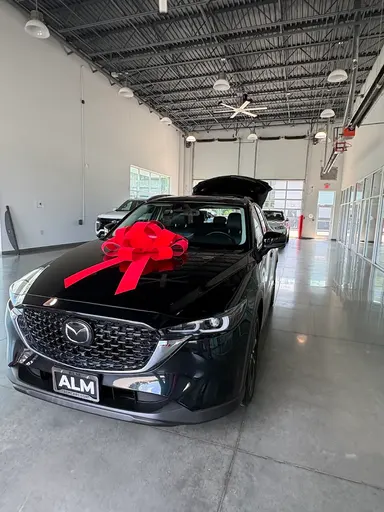
Rachel picked up her 2026 Optiq in Monarch Orange from Earnhardt Cadillac in Scottsdale. The handoff matched what had been agreed in writing, with no changes at the finance desk.
She left a Google review afterwards naming Shainit and the team, and what she chose to describe was not the number — it was that the process was seamless, responsive and stress-free through to delivery. That is the part that is harder to put in a table. You can read more of those on our client reviews page.
Shopping in Scottsdale or the wider Phoenix Valley? Don't sign a lease worksheet until you know what your target payment should actually be.
Book your free consultationThe three levers that move a lease payment
Once the selling price is locked, three variables remain. Each can quietly move the payment against you, and two of them are unfamiliar enough that most buyers never check them.
Money factor — the lease's interest rate, written as a small decimal instead of a percentage. Multiply it by 2,400 to get the approximate APR. Dealers are permitted to mark it up above the bank's buy rate and keep the difference. Because it does not look like an interest rate, it is rarely questioned. Ask for the base money factor in writing and compare it against your credit tier.
Residual value — the bank's prediction of what the car will be worth at lease end. A higher residual means you are financing less depreciation, which lowers the payment. It also sets the price if you want to buy the car at the end, so it cuts both ways. We cover this in more depth in our guide to auto lease value and residuals.
Capitalized cost reduction — the lease's version of a down payment. It lowers the monthly figure, but it carries a risk most people are never told about: if the car is stolen or totalled early in the term, insurance pays the leasing bank, not you. That money is simply gone. A smaller, deliberate down payment is usually the safer structure.
Why price comes before financing, always
This deserves restating on its own, because it is the single most common mistake and it is made before the buyer realises a negotiation has started.
Answer "lease or finance?" early and you hand the dealership a framework built around a monthly payment rather than a vehicle price. Every subsequent number can then be adjusted to protect that payment.
The alternative is to ask for the full out-the-door price first — vehicle price plus tax, title, registration and any legitimate fees — with no discussion of lease or finance terms at all. Get it confirmed in writing. Only then negotiate the structure on top of it.
That one sequencing change is the most reliable way to stop a dealership recovering a price concession through the financing side of the deal. If you want to know what that number should look like before you walk in, run it through our out-the-door price calculator.
Handling dealer pressure
Rachel's experience included a very familiar pattern: repeated contact, sometimes several times a day, asking what she could afford and pushing toward a decision.
This is not unusual and it is not a warning sign about that particular store. It is how the job works. Once a dealer believes a customer is genuinely interested, the task on their side becomes creating urgency before the customer has finished comparing alternatives.
The practical response is to let the pressure exist without engaging with it. You do not owe an explanation. You do not have to answer follow-ups. And the car will almost never actually disappear — there is another one, another dealership, another week. The goal is to make the final decision by comparing real numbers, not by reacting to a deadline someone else invented.
EV-specific diligence: the battery is the car
Because Rachel was cross-shopping electric vehicles, including a pre-owned Equinox EV, battery condition became a specific part of the work.
On any EV, and especially a used one, the battery is the single most expensive component, and its state matters far more than the equivalent question would on a petrol car. Standard diligence looks like this:
- Pull a Carfax and an AutoCheck report and review accident and ownership history.
- Check for open recalls on the VIN — the NHTSA recall lookup is free and takes a minute.
- If the car checks out otherwise, commission an independent pre-purchase inspection, typically around $150.
On an EV, that inspection should explicitly include a battery health assessment. A car only a few years old can show meaningful degradation that a test drive will never reveal.
The lease-return piece nobody talks about
Rachel's outgoing Lyriq lease came with its own bill. A pre-return inspection had flagged roughly $600 in charges: about $385 for windshield chips and $85 each for curb rash on two wheels.
This is a routine part of a lease transition and it is worth pausing over rather than simply paying what the inspection report says.
Two things are worth checking first. Some manufacturers offer more flexibility to repeat lessees than buyers expect, particularly when the next vehicle stays with the same brand — which was exactly Rachel's situation, Cadillac to Cadillac. And third-party glass and wheel repair is frequently cheaper than a dealership's lease-end chargeback for the same damage. Price both paths before you write the cheque.
Running two tracks at once
The part of this negotiation that is easiest to miss is that it was never a single linear conversation.
A Cadillac Optiq lease was being negotiated at one dealership while a pre-owned Chevy Equinox EV was being priced at a separate Tempe dealership, at the same time, with both compared against the same $300 target before any decision was made.
| Cadillac Optiq (2026) | Chevy Equinox EV (pre-owned, 2024) | |
|---|---|---|
| Type | New lease | Pre-owned purchase |
| MSRP / listed price | $54,919 | ~$26,000 |
| Target payment | $300/month | n/a (purchase) |
| Key variable | Money factor, residual, incentives | Battery health, Carfax/AutoCheck history |
| Outcome | Selected | Compared, not selected |
Running both tracks simultaneously — rather than exhausting one before starting the next — is what made a confident decision possible in days instead of weeks.
Comparing more than one vehicle or lease offer right now? That is precisely where the savings are found.
See our leasing conciergeDelivery day is part of the negotiation
Once a deal is agreed in writing, the work is not quite done.
Dealerships have been known to shift numbers at the finance desk, changing an agreed lease payment once the customer is physically present with a pen in their hand. The defence is having the structure in writing beforehand and having it confirmed directly with the dealership ahead of arrival.
For Rachel, delivery went the way it is supposed to: the paperwork matched the agreement, and she left with the keys and no surprises.
For buyers outside the US
Rachel's deal happened in Arizona, but the approach travels. Car Concierge Pro represents clients across the United States, Canada and the UAE, and the core sequence does not change: separate the vehicle price from the financing conversation, negotiate each independently, and never let the dealership control the order of the discussion.
One local caveat worth stating plainly — provincial sales tax and registration requirements in Canada vary, and should always be confirmed against current local rules before finalising an out-the-door number, exactly as state-specific fees are confirmed for US clients.
Frequently Asked Questions
1. What is a money factor, and how do I know if mine is fair?
2. Should I put money down on a lease to lower my payment?
3. Should I tell a dealer I'm comparing other vehicles or dealerships?
4. Is it worth negotiating a lease the same way as a purchase?
5. How much can a pre-purchase inspection actually save me?
6. What should I do about lease-end damage charges?
7. Do dealerships really change the numbers at the finance desk?
Ready to negotiate your own deal?
Rachel's result came from three things: comparing several vehicles at once, negotiating price before financing, and refusing to let dealership pressure set the pace. None of them required a confrontation.
If you are heading into a lease or a purchase — in Scottsdale, anywhere else in the US, or in Canada or the UAE — that process is what our car buying and leasing concierge service does. You can see the full engagement structure and what it costs on our pricing page, and if you have a car to dispose of first, the trade-in service runs alongside it.
And if you would rather start with the arithmetic than a conversation, run your own numbers through the out-the-door price calculator before you speak to a single dealership. For a second worked example on the EV side, this lease negotiation started at a $750 monthly quote.
Book your free consultation