





















In this article
Most of us have seen a car roof gone chalky and pale, yet very few owners notice the same process happening to the dashboard, door seals and tyres long before anything looks wrong. If you park outdoors, and especially if a caravan or trailer sits in the sun for weeks at a time, the aim isn't a miracle product. It's to cut exposure first and then look after each material properly.
This article gives you a prevention-first routine for spotting early deterioration, reducing sun exposure, and choosing care that suits paint, plastics, upholstery and rubber, for both your car and anything you tow.
Spot sun damage before fading becomes cracking
Cumulative exposure to strong Australian sun gradually breaks down the clear coat and pigments in paint, the polymers in plastics, the dyes in upholstery and the rubber in seals. The damage builds quietly, so by the time it's obvious, much of it has already happened.
It helps to separate UV from heat. UV radiation breaks chemical bonds, which is what bleaches colour and weakens surfaces, whereas heat speeds up drying and oxidation, and repeated heating and cooling stresses materials, so both contribute to cracking. Dark paint tends to run hotter, but no colour is immune to UV.
Look for warning signs by material. Paint turns dull or chalky, and a powdery film on your fingers means advanced oxidation, while upholstery fades, dashboard plastics become brittle, and door or window seals harden, stiffen or crack. Check horizontal panels such as the roof, bonnet and boot first, because they take the most direct sun and usually fail first.
It's worth knowing the limit of prevention, too. Protective products can't rebuild failed clear coat or repair a cracked seal, so if paint is peeling or flaking, or a seal is leaking, it needs assessment and repair rather than another coat of dressing. Condition like this is also one of the things a pre-purchase inspection is looking for on a used car that has lived outdoors.
Protect your vehicle from UV damage by reducing exposure first
Shade beats any product, so sort your parking before you spend money on treatments. A garage or carport takes direct sun out of the equation entirely. If you rely on shade from a building or tree, check where it will fall later in the day, because a cool morning spot can be in full sun by mid-afternoon, and UV is strongest through the middle of the day.
Inside the cabin, a well-fitting sunshade helps shield the dashboard and seats and reduces cabin heat, but remove it before driving so it never obstructs your view. Don't assume your glass blocks all UV either. Windscreens are generally treated to resist UVA, but side, rear and sunroof glass may offer less.
Where there's no shelter, use an outdoor-rated, breathable, UV-resistant cover sized for your vehicle, with a soft inner lining and secure fastening. Avoid improvised plastic tarpaulins, which trap moisture and flap against the paint. Always cover a clean, dry vehicle, because trapped grit and wind movement will abrade the finish, and keep ventilation paths clear and check for condensation underneath now and then.
Tree shade has a trade-off. Bird droppings and sap are acidic and can etch clear coat once the sun bakes them on, so remove them promptly.
Keep paint clean and maintain its protective finish
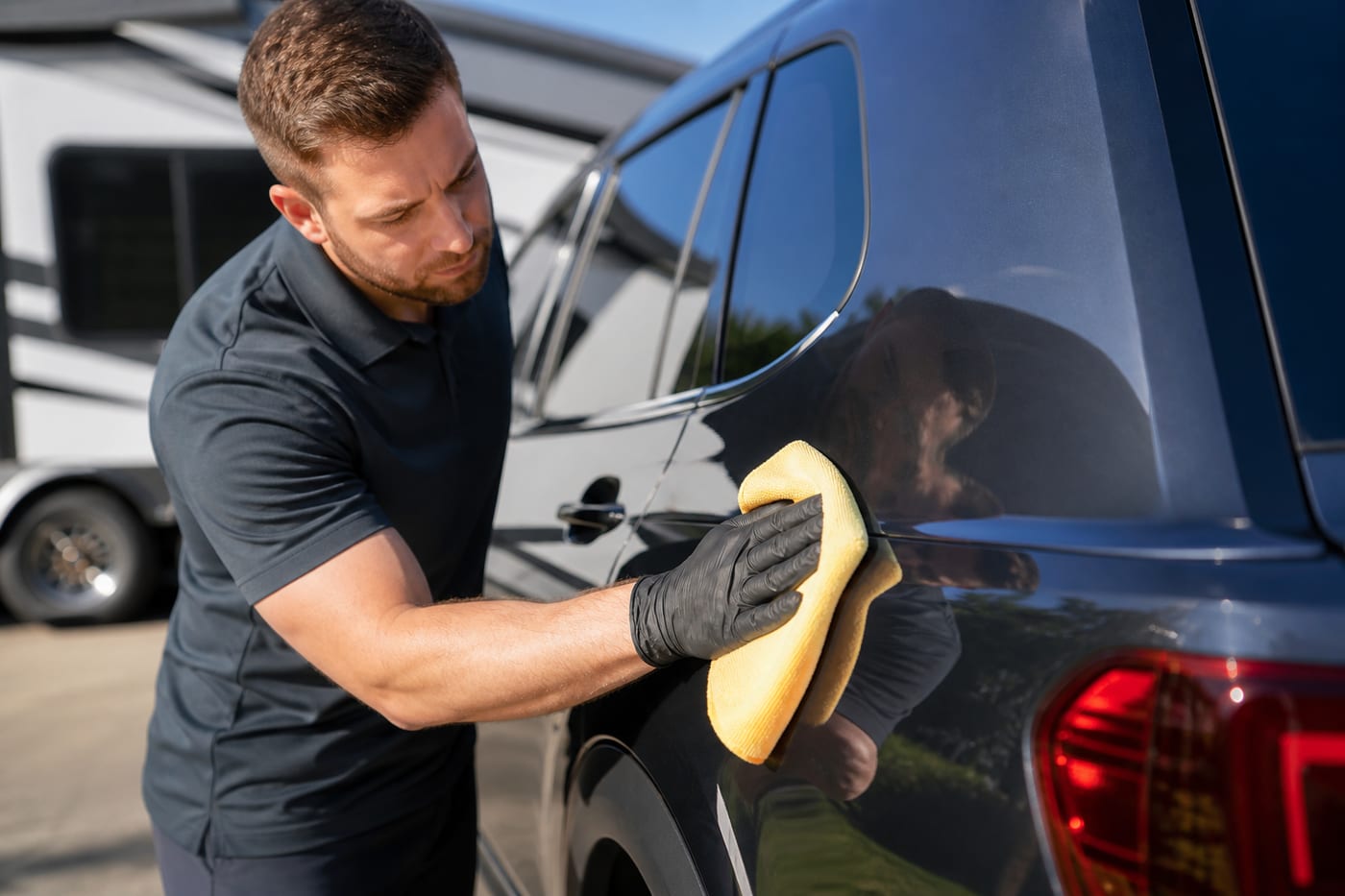
Clean paint is easier to protect, and a good routine limits the chemical and abrasive damage that lets UV do more harm. Wash on cool panels in shade with a suitable automotive shampoo and clean wash tools, then dry carefully. The two-bucket method, one for suds and one for rinsing your mitt, keeps grit from being dragged across the clear coat. Avoid dish soap, which strips protective layers, and drying in the sun, which leaves mineral spots.
Deal with bird droppings, insects and sap quickly by softening them with water or a paint-safe cleaner and lifting them off rather than scraping. It's worth being clear about what this achieves: it prevents etching and scratching, but it doesn't stop UV exposure itself.
Once the paint is properly cleaned and prepared, a compatible wax or paint sealant adds a sacrificial layer and makes future cleaning easier. Renew it according to the product instructions, your exposure and the paint's condition, rather than a single interval for every vehicle. Treat these products as temporary support for the existing finish, because neither wax, sealant nor coating makes paint sunproof, and none replaces sheltered parking.
Match dashboard, upholstery and seal care to the material
Interiors and rubber need different care, so avoid one-product-fits-all habits. Clean the dashboard and interior plastics gently first, then use a UV-protective product recommended for your vehicle. Test it on a hidden spot, and favour a low-gloss finish, which reduces reflections on the windscreen.
Upholstery varies, too. Leather, vinyl and fabric each need products approved for that material, with UV protection where suitable, so follow the manufacturer's care guidance, particularly for leather, which can fade and crack in prolonged sun. Keep slippery dressings well away from the steering wheel, pedals, gear selector and other driving controls.
For door, window and boot seals, clean them and use only treatments approved for their rubber formulation. Avoid indiscriminate oils, solvents or general-purpose plastic dressings, which can do more harm than good. While cleaning, look for fading, stiffness, brittleness, cracks and signs of water getting in, because a damaged seal needs repair or replacement, and a treatment marketed as rejuvenating won't fix it.
Prepare caravans and trailers for outdoor storage, and check them before towing
A caravan or trailer faces the same exposure for far longer, so use the same exposure-first approach. Choose covered storage if possible. Otherwise fit a breathable, UV-resistant cover correctly, fasten it securely and keep any required ventilation unobstructed. For further caravan-specific advice, RV Parts Express offers useful guidance on protecting your caravan from harmful UV rays alongside the points here.
Before storage, inspect the roof, rooflights, windows and their seals. Use cleaners and protective treatments approved for your particular roof, body and glazing materials, because automotive wax or glass cleaner may not suit every caravan surface. Cover tyres where practical and check sidewalls for weathering and cracking, bearing in mind that covers don't replace checking tyre age, condition and pressure before towing.
A simple storage checklist:
- Clean and dry the caravan or trailer before covering it.
- Note and photograph existing deterioration so you can spot change later.
- While it is stored, check the cover's fastening and look for moisture when it is safe to do so.
- After uncovering, and before travel, inspect roof, windows, seals, signs of leaks and tyres.
Set inspection and product renewal by manufacturer guidance and how much sun the vehicle actually gets, not a universal calendar. Keeping the paperwork for any of it is worth the effort, which is the argument behind car maintenance records.