









In this article
She already had the right kind of car. A Kia Niro plug-in hybrid, and what she liked about it was specific: she could drive around town all week without using gas. The problem was size. A long road trip was coming, with camping and nights spent sleeping in the car, and the Niro is not a car you sleep in.
So the brief was a bigger plug-in hybrid, used, under about $32,000 with tax and fees inside that number, and one filter that was not negotiable: it had to plug in. Not a hybrid. Not full electric. This is the discovery call that turned that into a search, including the part where it became clear that $32,000 and $32,000 all-in are two different cars.
When the Car You Love Is Too Small for the Trip
The easiest brief to work with is a buyer who already knows what they want and why.
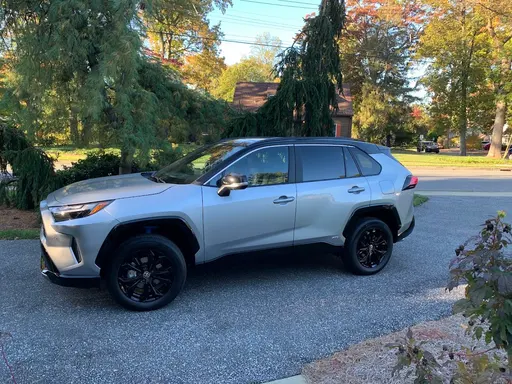
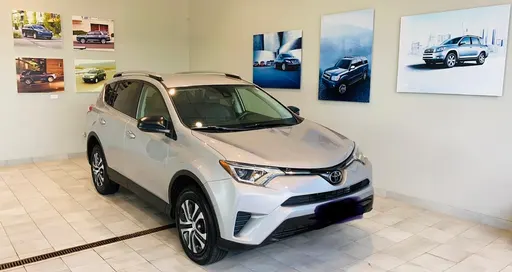
She had done the obvious homework. A Kia Sportage plug-in hybrid was the shortlist, and she had saved a couple of candidates on AutoTrader. She had also looked at the Toyota RAV4 and reached a conclusion many plug-in shoppers reach: it sits at a higher price point, and there is simply less of it around at any given moment.
What she did not want was the process. In her words, she does not like bartering, does not like negotiating, and does not want to leave a dealership feeling she has been taken advantage of. That is not a knowledge gap. It is a preference about how to spend a Saturday, and it is the most common reason people hire a buyer's agent.
Explore the full Car Buying Concierge service to see how a complete engagement is structured from the first call onward.
Behind Every Great Deal Is One Team. Meet Car Concierge Pro
Neel Mehta, founder and chief negotiator at CCP, is a TEDx speaker and a Biomedical Informatics graduate from Arizona State University, and the statistical habit in the method is his own.
CCP started with his own first new car. He wanted one specific Nissan SUV, in one color, and assumed the price would be the price. There were twelve Nissan dealerships in the Phoenix valley. He took time off work and visited all twelve over seven consecutive days, and every one quoted something different for the same car: window tint, security fees, paint protection, convenience packages, a $24,000 vehicle presented at $32,000. He ended up buying it for about $7,000 less than the first ask by making dealerships compete and refusing to accept any price that was not in writing on a dealership quotation.
Friends asked him to do it for them. Then their families. CCP now has a 14-person full-time team working six days a week, has served close to 1,200 clients across the USA and Canada on vehicles from $20,000 to $2 million, holds 122 reviews at a 4.8 rating, BBB A+ accreditation and two 2025 Corporate Vision Awards. It owns no inventory and takes nothing from any dealership.
What Does a $32,000 Budget Actually Buy?
Roughly a $29,500 car, once tax, title, registration and documentation fees are inside the number.
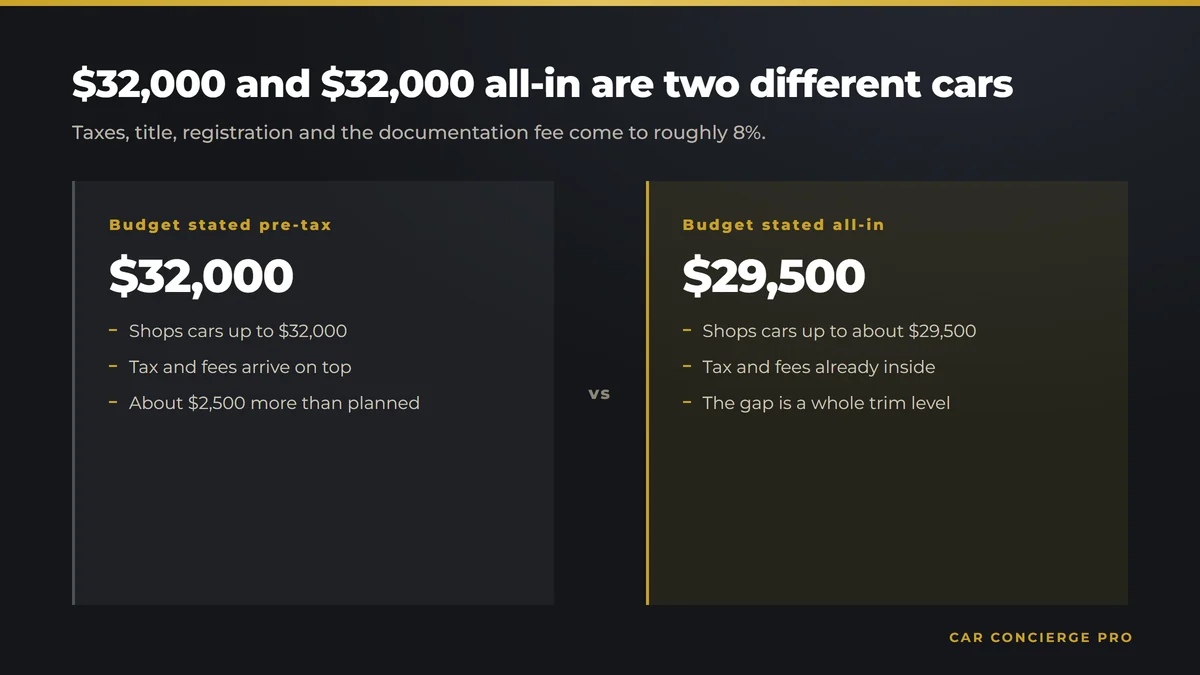
This came up on the call as a genuine question: she did not know how much those items add. The working figure is around 8%, give or take, depending on state and county. On a $30,000 vehicle that is about $2,500 on top.
It is a small exchange with a large consequence, because almost every listing you browse is a pre-tax number and almost every budget you set is a total. Deciding which one your ceiling refers to changes the entire search:
- A $32,000 pre-tax ceiling shops cars up to $32,000
- A $32,000 all-in ceiling shops cars up to roughly $29,500
- The gap is a whole trim level on a car in this class
The brief was written as $30,000 to $32,000 inclusive of taxes, with a note to stretch toward $35,000 only if nothing good appeared. The CCP Out-The-Door Price Calculator does that conversion on any candidate.
Why Two Identical Cars Can Cost $7,000 Apart
Because MSRP is set by the manufacturer and the out-the-door price is set by the dealership, and only one of those is printed on the window.
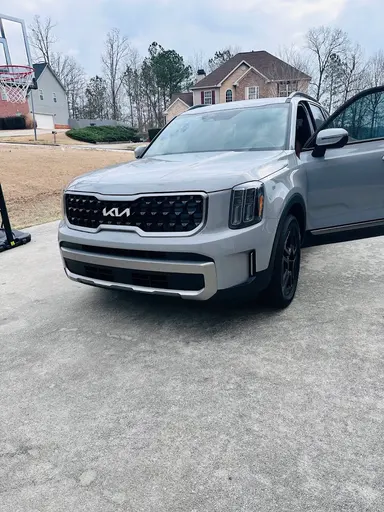
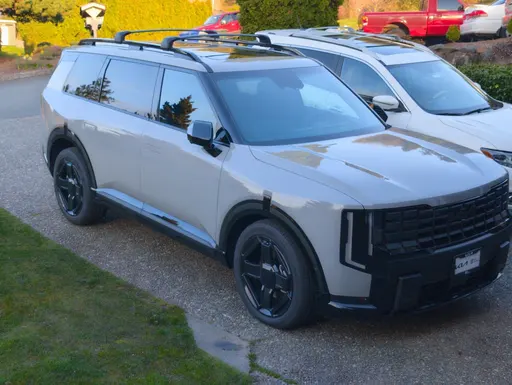
The clearest illustration on the call came from another engagement. That client could not decide between a Kia Telluride and a Hyundai Palisade, so both were searched in parallel. The team logged close to 90 listings, each with its packages, mileage, interior and exterior color, dealership, Carfax link, owner count, accident status, the salesperson being dealt with, and the quoted out-the-door price.
Laid out that way, something showed up that no individual listing reveals. Cars with the same MSRP were landing at $55,000 out the door in one place and $62,000 in another. Same car. Seven thousand dollars.
That spread is the entire argument for documenting a search rather than browsing one. A buyer comparing two or three cars in their own area cannot see it, because the comparison needs enough cars for the pattern to appear. It is also why a listing price is treated here as an opening position rather than information.
How Do You Write a Brief for a Used Plug-In Hybrid?
By separating the one filter that cannot bend from the ones that can, and writing both down before anything is searched.
The brief that came out of this call, in the order it was taken:
| Requirement | What was agreed |
|---|---|
| Powertrain | Plug-in hybrid. Not a hybrid, not full electric. Non-negotiable |
| Condition | Pre-owned only |
| Model year | 2022 to 2025. A 2026 used car prices too close to new |
| Mileage | Under 30,000 |
| Budget | $30,000 to $32,000, taxes and fees included |
| Exterior color | Sage green, gray or red preferred. Not white, but white accepted |
| Interior | Darker, or beige |
| Trim | No preference, with a trim comparison to be provided |
| Sunroof | Nice to have, not a requirement |
| Payment | Cash |
| Timeline | About two weeks |
| Radius | Start at 100 miles, widen to 200, 500, statewide, nationwide |
Two things in that table do real work. "Not white, although I will take white" is a better answer than a hard color rule, because it keeps the pool wide while still telling the team which car to push for. And "no preference on trim, but show me the comparison" is how you avoid paying for a trim you did not need: the trims get listed side by side on specification and on price, and the decision is made with both visible.
The search itself runs across more than 18 listing platforms, including AutoTrader, Cars.com, AutoList, CarGurus, KBB, Carfax and AutoTempest. Where the inventory does not surface online, dealerships inside the radius get called directly and asked what they have.
What If You Have Already Found a Car?
It goes into the same document as everything else, and it gets negotiated like everything else.
She had found a Sportage plug-in at a Kia dealership listed around $33,500, which was above her ceiling, and asked the obvious question: can that come down? The answer is that a listing a client brings is not treated differently from one the team finds. It gets added to the comparison, the dealership is contacted, and the negotiation starts on it alongside the rest.
That matters because buyers often assume hiring a service means abandoning their own research. The opposite is more useful. Her saved listings were the fastest route to understanding what she actually wanted, and the invitation on the call was to keep sending more as she found them.
What Gets Checked Before a Used Plug-In Is Bought
Title, history, the dealership's own inspection, and then an independent inspection on the car that is actually going to be bought.
A used plug-in hybrid has two drivetrains to go wrong, and the battery is the expensive one. The checks on this engagement:
- Carfax and AutoCheck: accident history, owner count, service record
- Title status, because a salvage title is how a too-good price usually explains itself
- The dealership's own inspection report, requested in writing
- A pre-purchase inspection by an independent certified inspector, covering engine, transmission and battery
She raised the title point herself, from experience: on AutoTrader it is easy to forget to filter for a clean title, and then a listing looks too good to be true. It usually is.
The pre-purchase inspection runs about $150 to $200 and is deliberately done once, on the shortlisted car, after the price is agreed and the color and trim are right. Spending it on every candidate would be spending money to no purpose.
What Does the Engagement Cost, and What Is Extra?
$998 for the concierge fee, split in half, with the second half invoiced only after the car is in your hands.
The structure is $499 to begin the process and $499 once the Sportage is actually hers. Nothing before that, and nothing in between. The fee is flat, agreed in writing, and does not move with the price of the car. CCP is not a broker and takes no kickback from any dealership.
Two costs sit outside the fee and are paid directly to the provider, not to CCP:
- Pre-purchase inspection, roughly $150 to $200
- Shipping, if the car is sourced far away, at roughly a dollar per mile
Naming both on the first call is the point. A number that grows after you have committed is the thing this whole service exists to avoid, and that applies to its own invoice too. Current pricing across all tiers is published at CCP pricing.
How Long Does a Used Search Take?
About two weeks here, set by the client's own deadline rather than by the process.
She wanted the car by the beginning of the following month, and the brief was written to that date. Work on the listing she had already found began the same day; the full documented search started on the next working day. Updates arrive by email at least every other day, with the whole comparison document open to her at any time.
Longer is usually better on a used search, because more days mean more listings surfacing and more rounds of negotiation. But a fixed date is a specification like any other, and it is better handled by writing it down than by hoping.
The Car Concierge Pro Difference
- No commissions, no dealer affiliations, and no payments from any manufacturer
- A flat $998 fee, half of it payable only after delivery
- Search across 18+ listing platforms plus direct dealership calls
- Radius widened until the specification is met, not capped at a drive
- Every candidate logged with its out-the-door price, not its listing price
- Trim-level comparison provided so you do not overpay for a badge
- Carfax, AutoCheck, title check and the dealership's own inspection report
- Independent pre-purchase inspection on the car being bought
- Inspection and shipping costs named up front and paid direct, not marked up
- Test drives arranged without the client speaking to a salesperson
- Your own saved listings negotiated alongside the ones the team finds
Every engagement is backed by CCP's 30-day money-back guarantee. Terms and conditions apply.
Real CCP Client Savings
A snapshot of documented results across recent client engagements.
| Vehicle | Client Savings |
|---|---|
| Toyota Prius | $1,350 |
| Hyundai Tucson Hybrid | $3,500 |
| Lexus GX 550 | $3,800 |
| Lexus NX 350h | $4,500 |
| BMW X3 | $7,592 |
| Audi S5 Coupe Premium Plus | $8,070 |
Every result above was negotiated independently on behalf of a real client. Names and identifying details are withheld for privacy.
Sound Like You?
Common situations that sound like this one:
- You want a plug-in hybrid specifically and the supply near you is thin
- You need a bigger version of the car you already like
- You have a budget and are not sure whether it includes tax and fees
- You have saved listings and want them priced properly rather than ignored
- You are buying used and want the title and battery verified, not assumed
- You do not want to negotiate, and do not want to feel taken advantage of
- You have a date to meet and want the search written to it
Every CCP engagement is backed by a 30-day money-back guarantee (terms apply).
FREQUENTLY ASKED QUESTIONS
1. Is a used Kia Sportage plug-in hybrid a good road-trip car?
It suits the use case well: enough space to sleep in, and electric-only running for the town miles either side of the trip. On a used example the thing to verify is battery health, not just mileage.
2. How much do taxes and fees add to a used car price?
Around 8% in most places, covering sales tax, title, registration and the dealer documentation fee. On a $30,000 car that is roughly $2,500, so a budget should always be stated as all-in or pre-tax.
3. Why do two cars with the same MSRP have different out-the-door prices?
Because the dealership controls everything after MSRP: add-ons, fees, and the discount it is willing to give. Spreads of several thousand dollars on identical cars are normal, which is why only out-the-door prices can be compared.
4. Should I buy a 2026 model used or go a year older?
A one-year-old car often prices too close to new to be worth it. The useful test is depreciation against MSRP relative to mileage, which usually favors something two to four years old.
5. Do I need a pre-purchase inspection on a plug-in hybrid?
It is worth it. There are two drivetrains plus a high-voltage battery, and the battery is the expensive failure. Expect roughly $150 to $200, spent once on the car you are actually buying.
6. How can I check a used car has a clean title?
Filter for it on the listing sites, then confirm with Carfax or AutoCheck and the paperwork itself. A price well under the market usually has a title or history explanation behind it.
7. Can a concierge negotiate on a car I found myself?
Yes. A listing you bring is added to the comparison and negotiated the same way, and your own research usually speeds the brief up rather than slowing it down.
Start Your Own Engagement
The right vehicle at the right price, with every number documented before you sign.
Schedule a complimentary 30-minute consultation.
Read more client journeys at Client Stories, or see what clients say at Client Reviews.
📞 +1 (480) 418-6390
🌐 carconciergepro.com
Every CCP engagement is backed by a 30-day money-back guarantee (terms apply).